





Eurasian eagle-owl




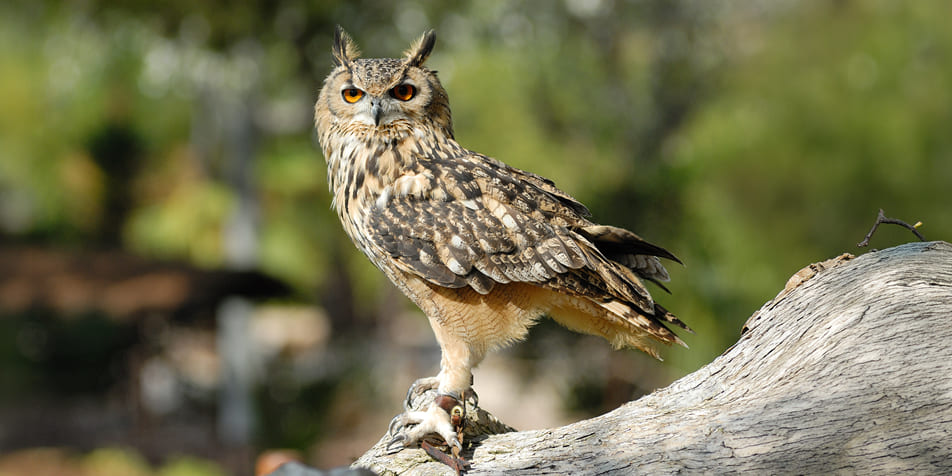
Eurasian Eagle-Owl: the bird of prey with wings that go on forever
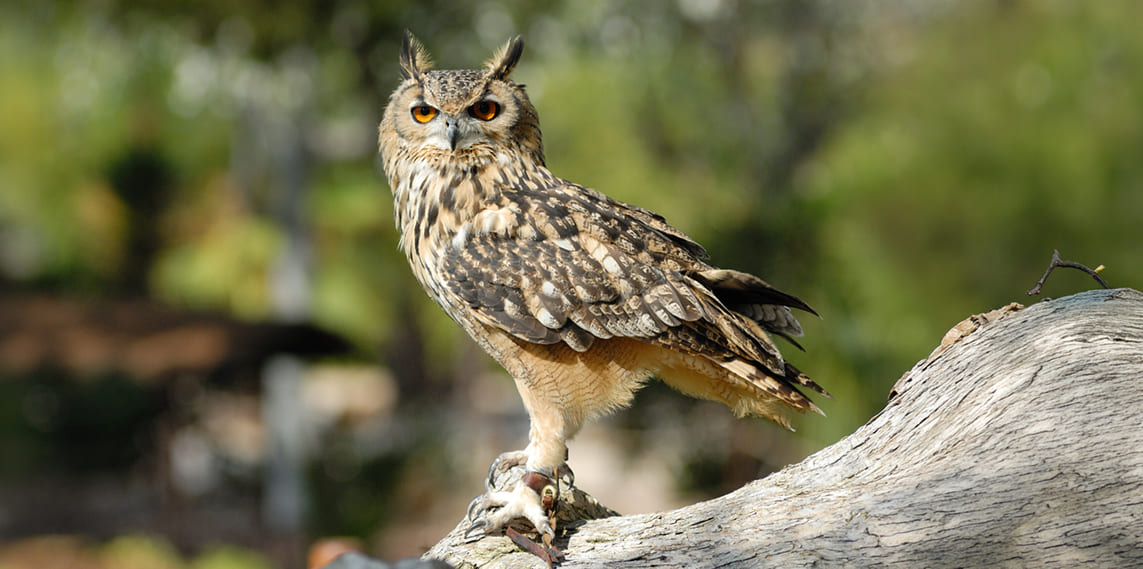
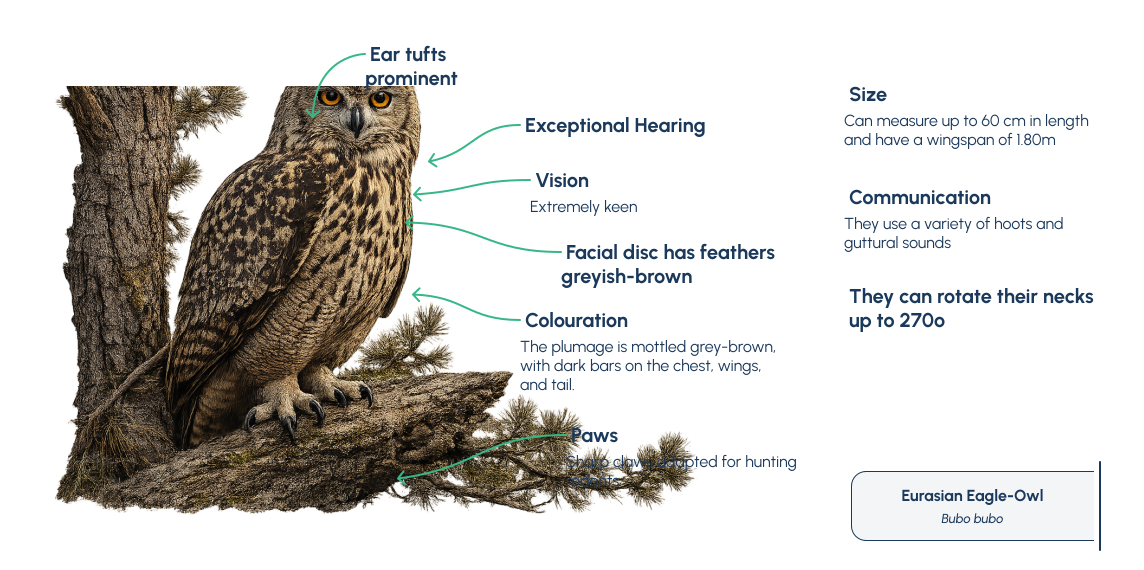
The Eurasian Eagle-Owl is a nocturnal bird of prey that can be found across much of mainland Portugal. It is the largest nocturnal bird of prey in Europe, reaching more than 60 cm in length and a wingspan of up to 1.80 metres.
It’s a name literally translates as “eagle-owl”.
Appearance and behaviour
The Eurasian Eagle-Owl has a wingspan that can reach 1.80 metres.
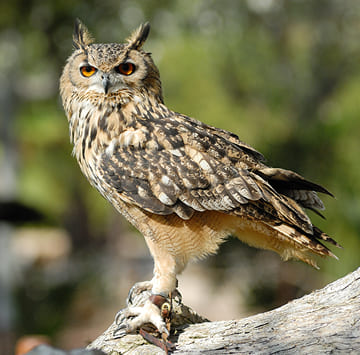
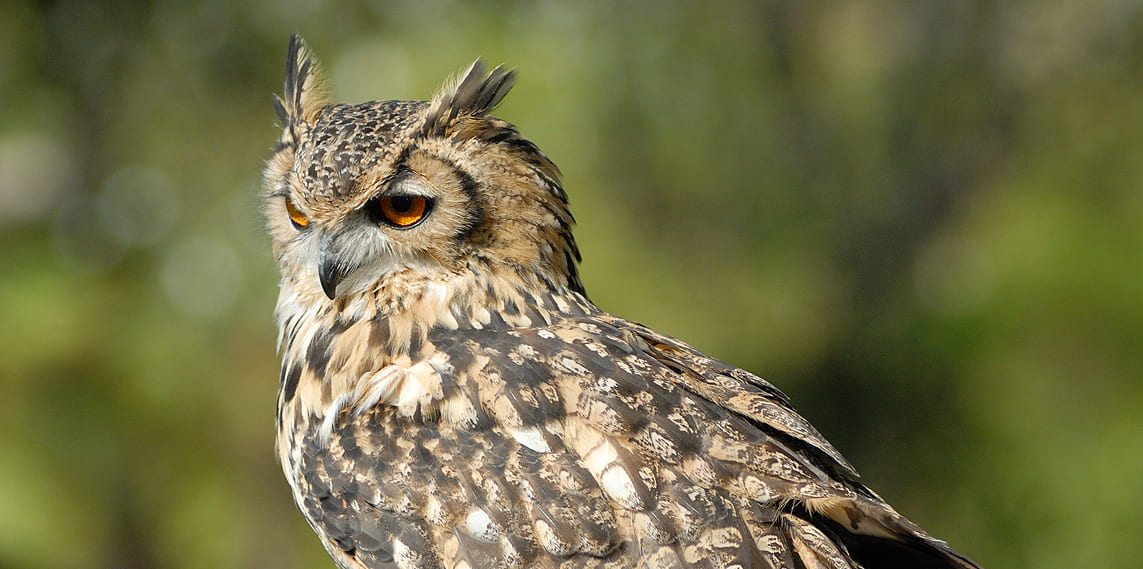
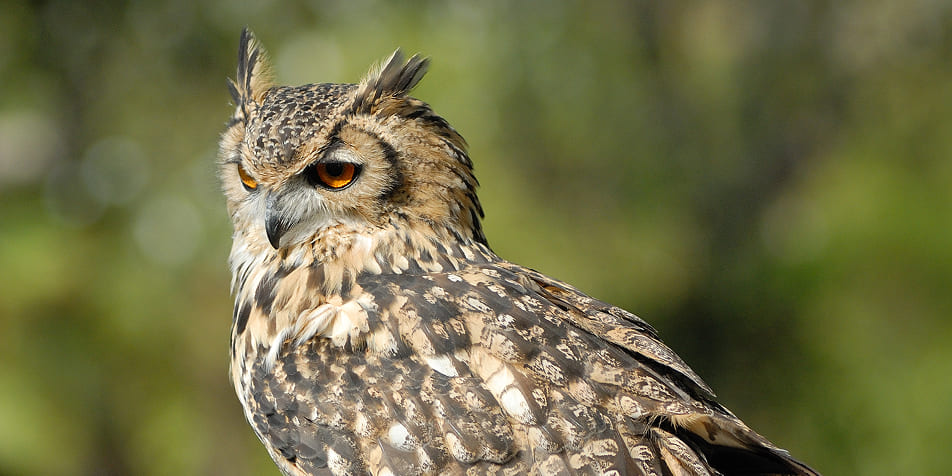
With prominent ear tufts, its plumage is mottled brownish-grey, with dark barring on the breast, wings and tail. The underparts are lighter, while the facial disc is covered with brownish-grey feathers. The arrangement of these feathers helps direct sounds towards the ears, allowing the owl to locate prey in complete silence. They can rotate their necks by up to 270°.
It has a distinctive call, similar to a scream. Most active during twilight, it remains motionless during the day, making its presence almost impossible to detect.
Eurasian Eagle-Owls are solitary birds that only come together during the mating season. During this period, they communicate through characteristic calls to signal nesting sites and maintain contact with their mate, forming bonds that can last a lifetime.
Their breeding activity is closely linked to environmental conditions, and they are highly sensitive to the availability of resources. When food is scarce, mating takes place later and at a reduced rate, while in favourable habitats with an abundance of prey, reproduction increases considerably.
Females reuse abandoned nests in rocky areas with little human disturbance. They lay between four and seven eggs, which are incubated for approximately 30 days. The chicks receive parental care for around five weeks.
Habitat and diet
This species inhabits a wide variety of environments across Europe, Asia and northern Africa. It can be found in forests, taigas, steppes, grasslands, semi-arid areas and rocky terrain, demonstrating a remarkable ability to adapt. It prefers areas with rocky outcrops and cliffs, where it finds shelter and ideal nesting sites, such as caves, crevices and ledges.
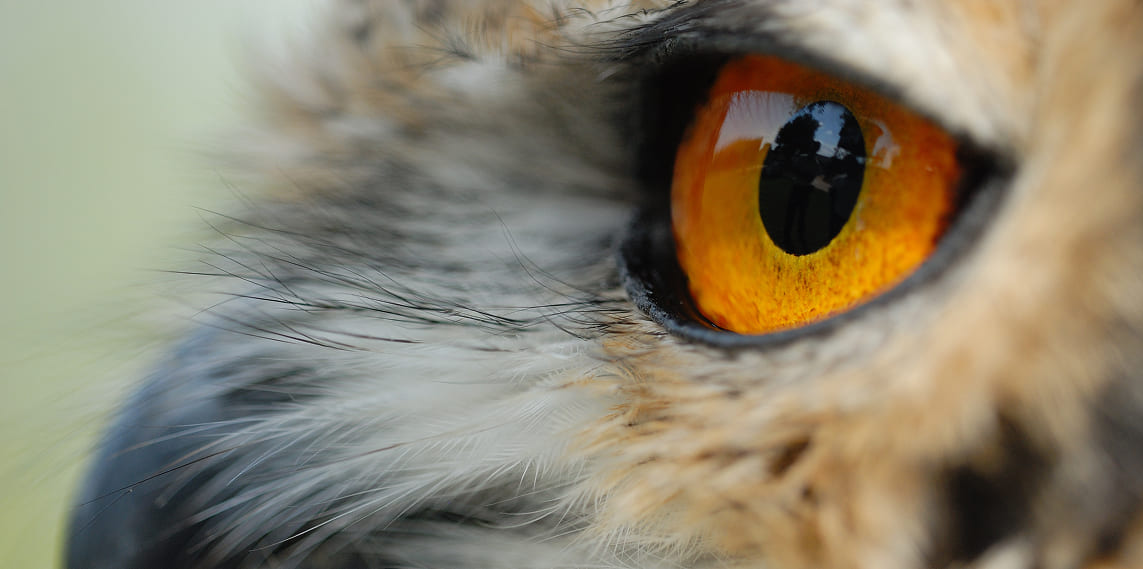
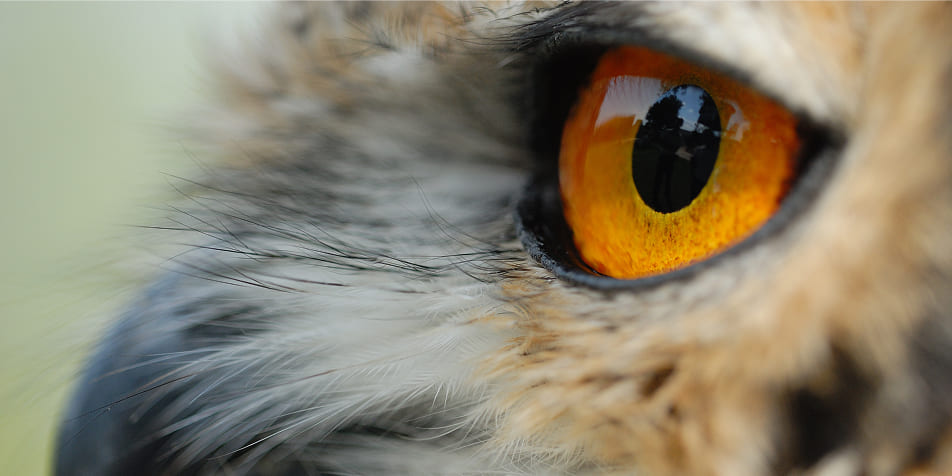
When it comes to feeding, the Eurasian Eagle-Owl is a predator that hunts mainly at dawn and dusk, using its keen eyesight and exceptional hearing. Its diet consists mainly of small mammals such as mice, rats and rabbits, but also includes birds (including other birds of prey), reptiles, amphibians and small and/or medium-sized fish.
Some animals that form part of the Eurasian Eagle-Owl’s diet can become pests if they are not preyed upon. Therefore, the presence of birds of prey near our homes can be beneficial for controlling, above all, rodent populations.