





American alligator




Mississippi alligator: the great predator of the marshes
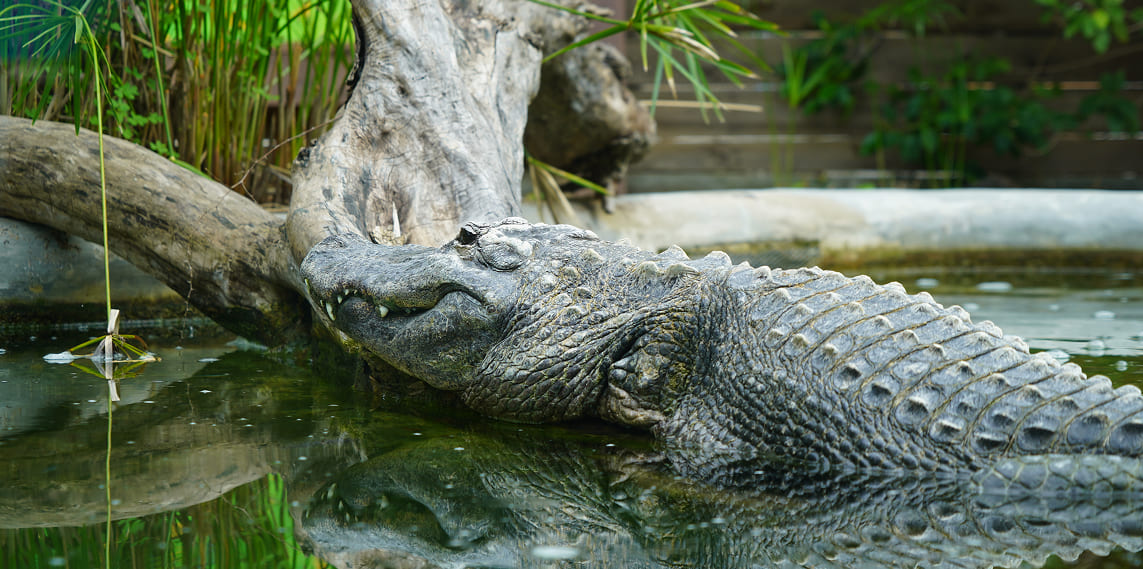
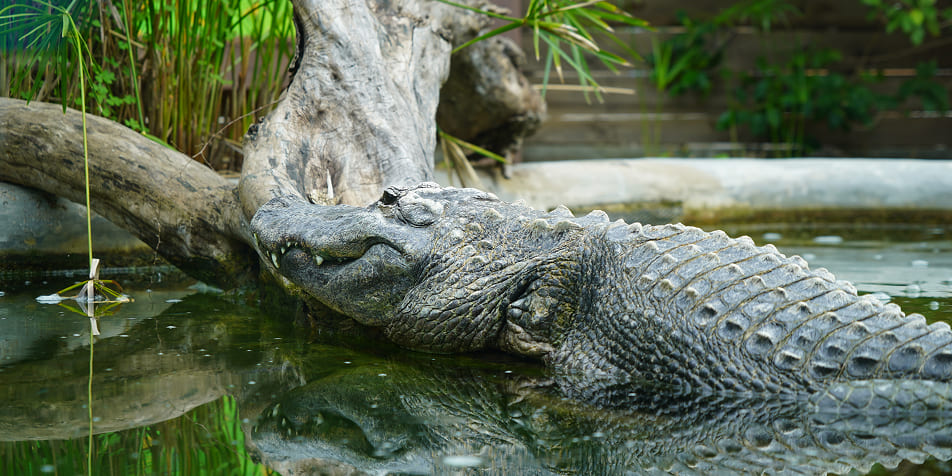
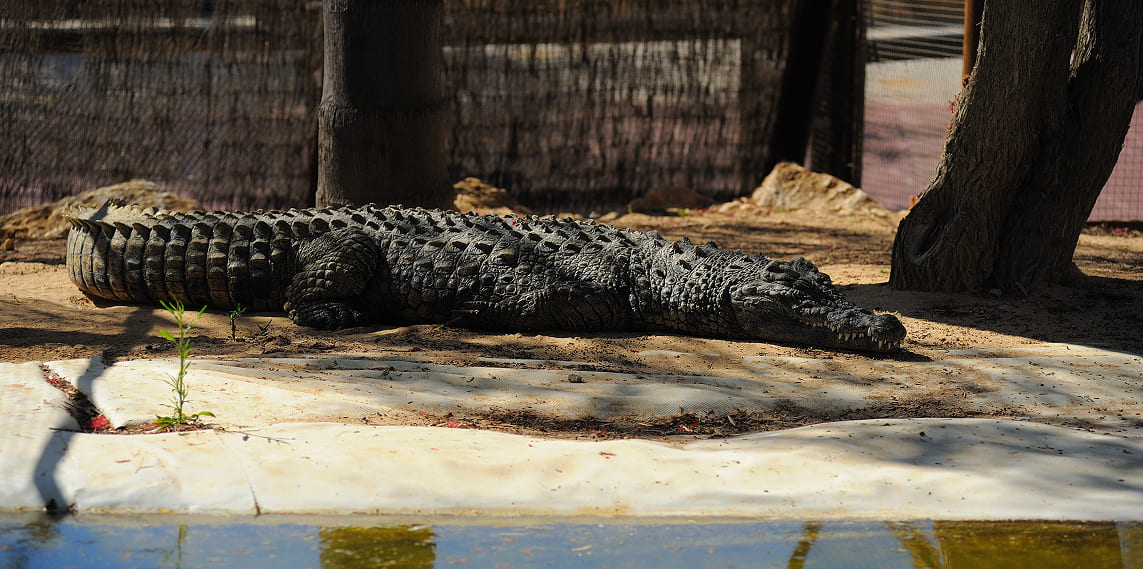
Massive and protected by tough bony plates along its back, the Mississippi alligator (Alligator mississippiensis) is impressive in size. In the wild, these animals are among the largest reptiles to be found in North America.
There is much to discover about this animal!
Appearance and behaviour
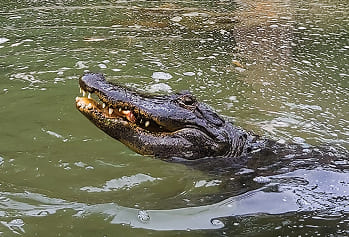
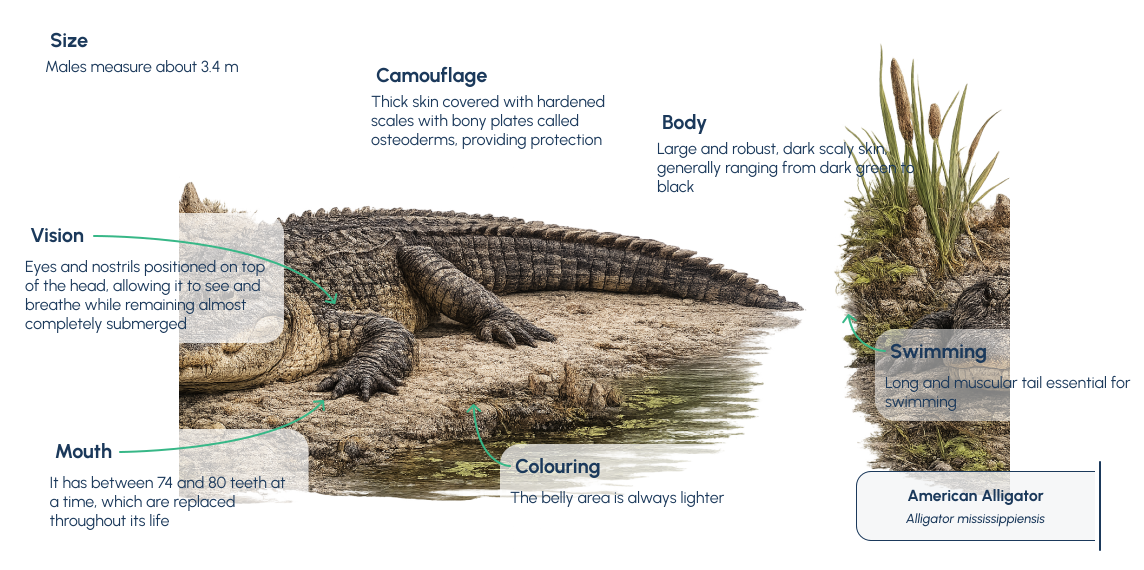
The American alligator is an imposing reptile. Males (which are considerably larger than females) can weigh up to 450 kilograms, with the largest recorded specimen measuring 5.8 metres.
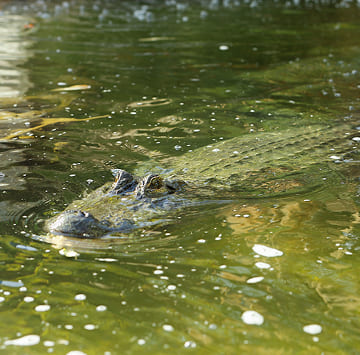
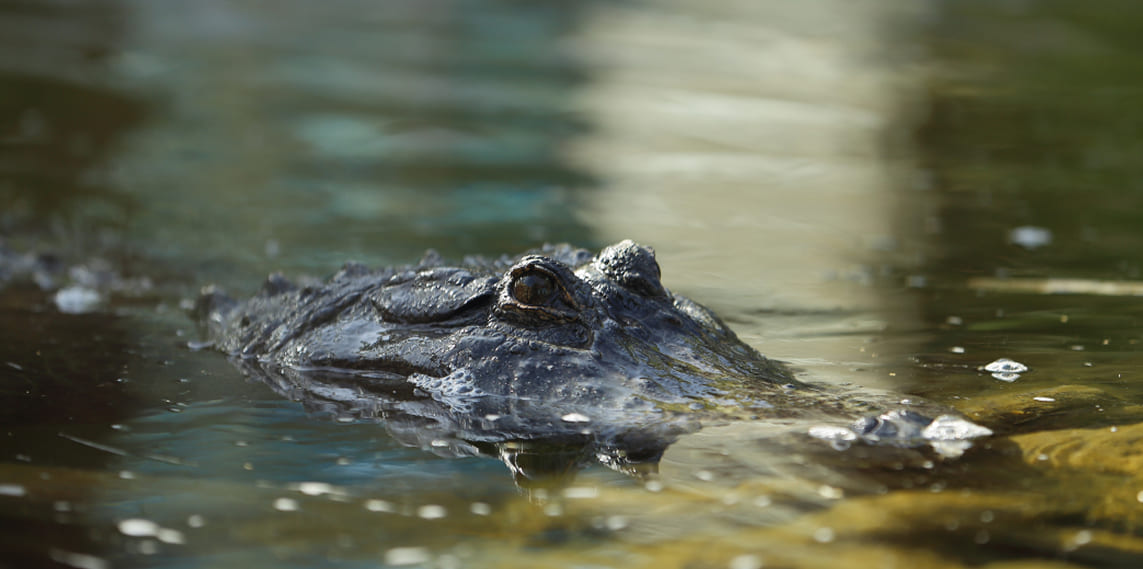
The animal has dark colouring and a lighter belly, in shades of creamy white. It has scaly skin protected along its back by rows of bony plates (osteoderms). With protruding eyes and nostrils, it is able to remain alert and breathe underwater, even with its body completely submerged.
When temperatures drop, it can enter a state of dormancy, which is not quite hibernation. To do this, it chooses to stay in burrows dug near watercourses or to bury itself in the mud.
After mating, the female builds a nest of vegetation, in which she lays between 35 and 50 eggs. The eggs hatch after an incubation period of around two months. Throughout the first year of the young’s lives, the mother protects them inside her mouth, carrying them from place to place.
Habitat and diet
The American alligator is native to North America and can be found across a range stretching from Texas to North Carolina in the south-east of the United States of America. The largest populations of this species are found in Louisiana and Florida.
It lives in freshwater marshes, lakes, wetlands and watercourses, where it is fully adapted and acts as an apex predator. Nevertheless, it can tolerate short periods in salt water.
Having no natural predators (apart from hunting by humans), the American alligator tends to be very territorial, particularly during the breeding season. With a powerful bite, it maintains a carnivorous diet, feeding on animals of various sizes. Its role as a predator is fundamental to the balance of the ecosystems in which it is found.