





Axolotl




Axolotl: forever young
The axolotl is one of the world’s most unique and iconic amphibians. Belonging to the same biological genus as salamanders, it differs from them in its ability to remain in the larval stage throughout its entire life.
Discover more about this species, which retains its youthful appearance throughout its life and remains in an aquatic environment.
Appearance and behaviour
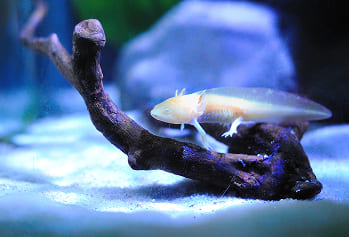
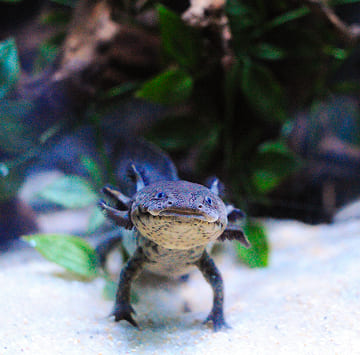
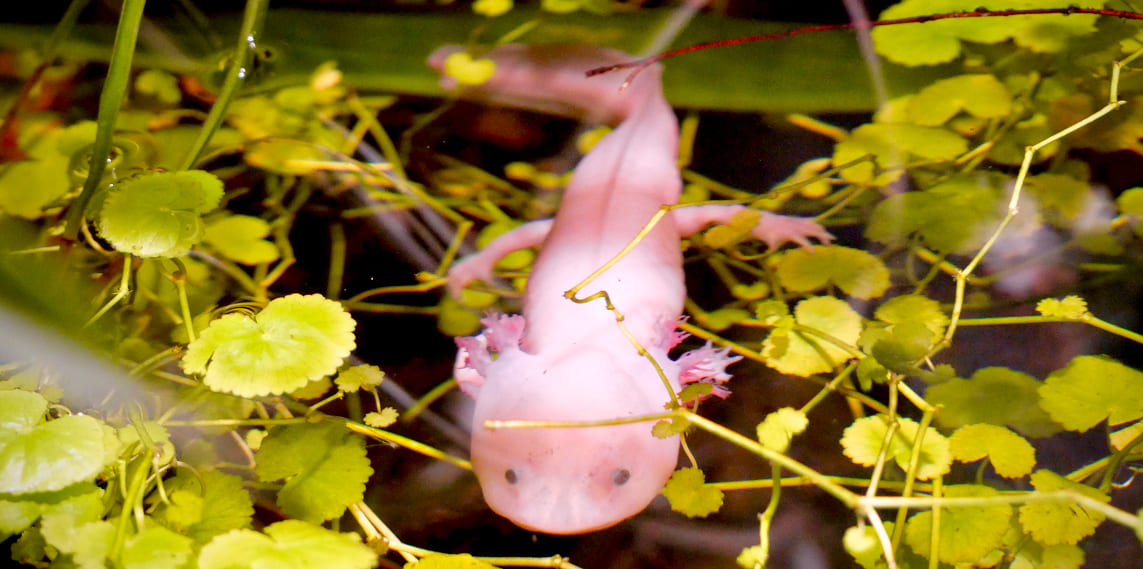
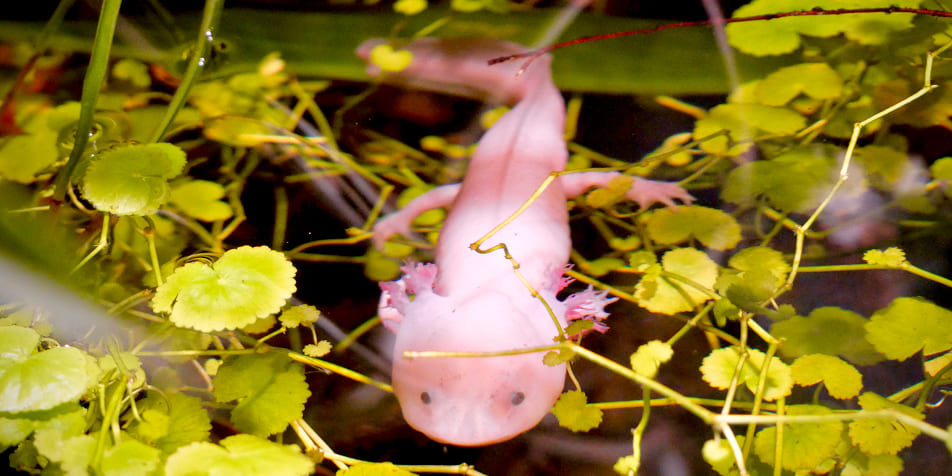
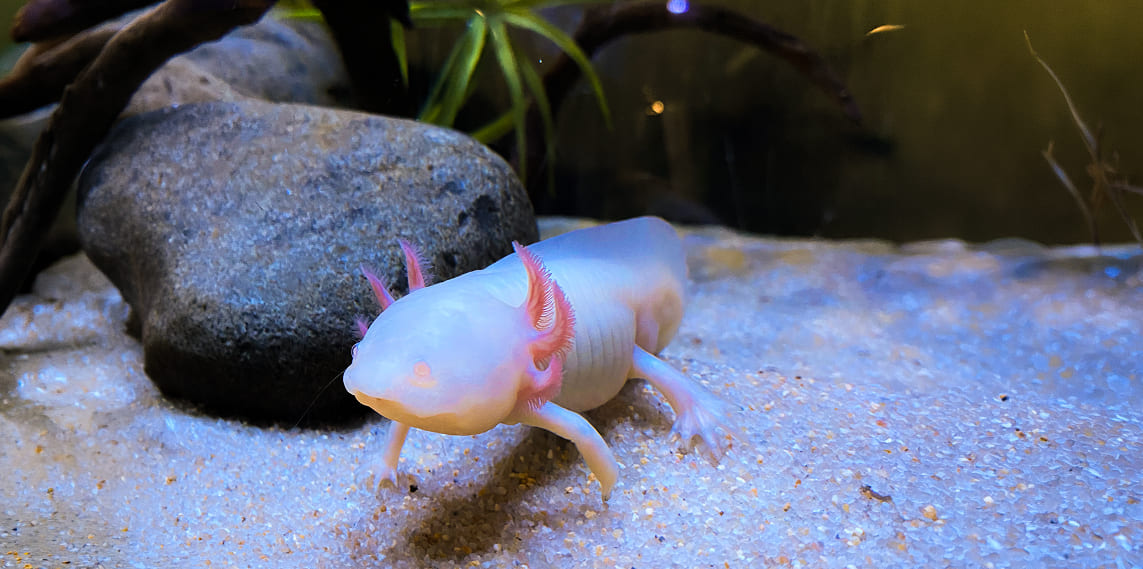
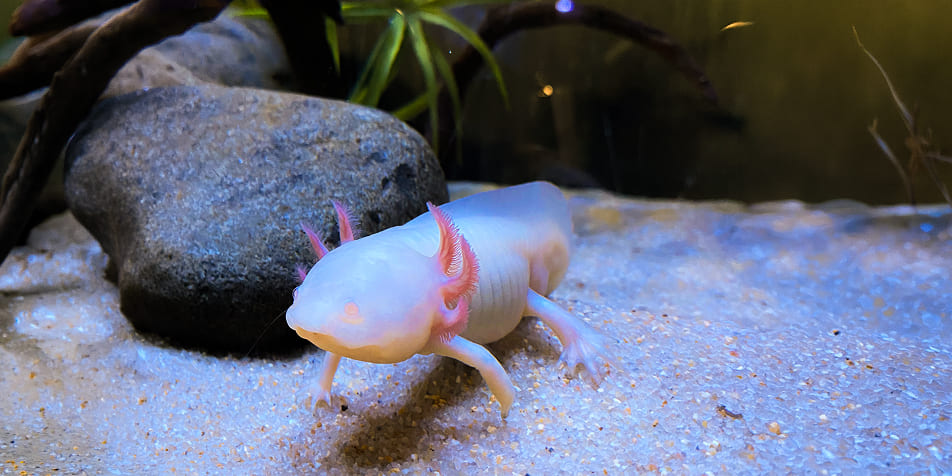
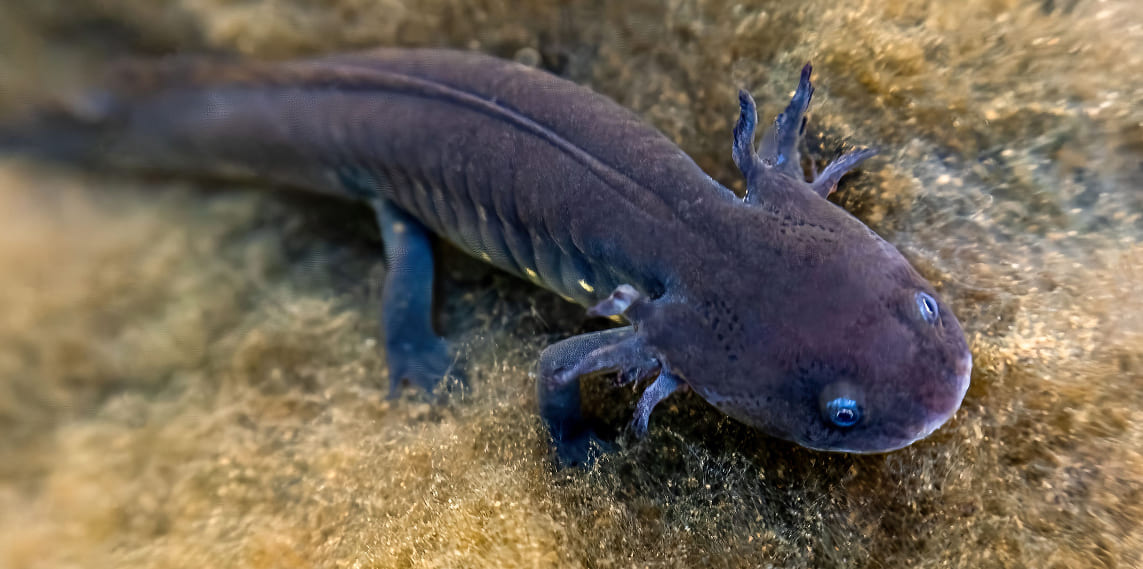
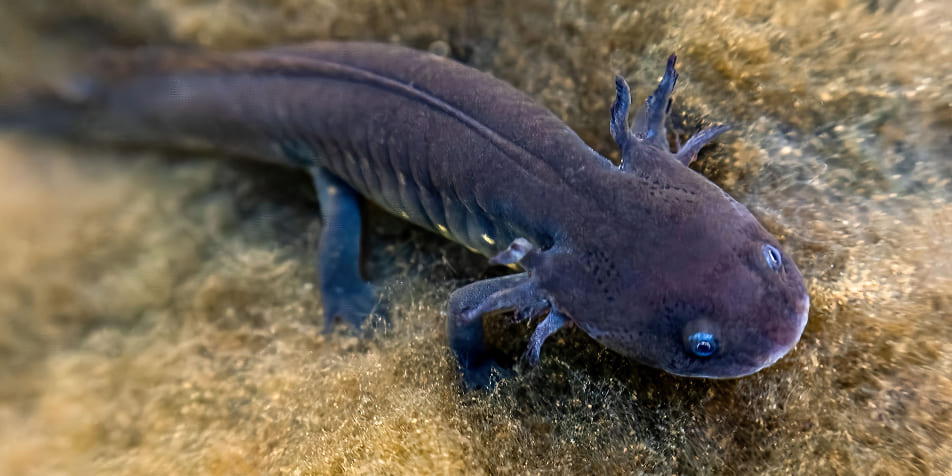
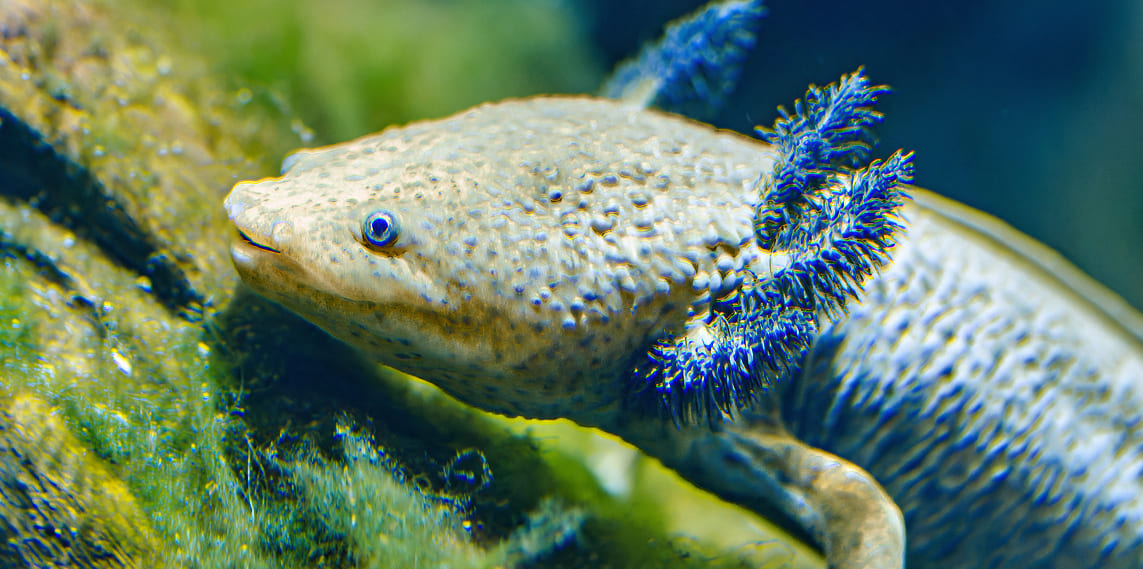
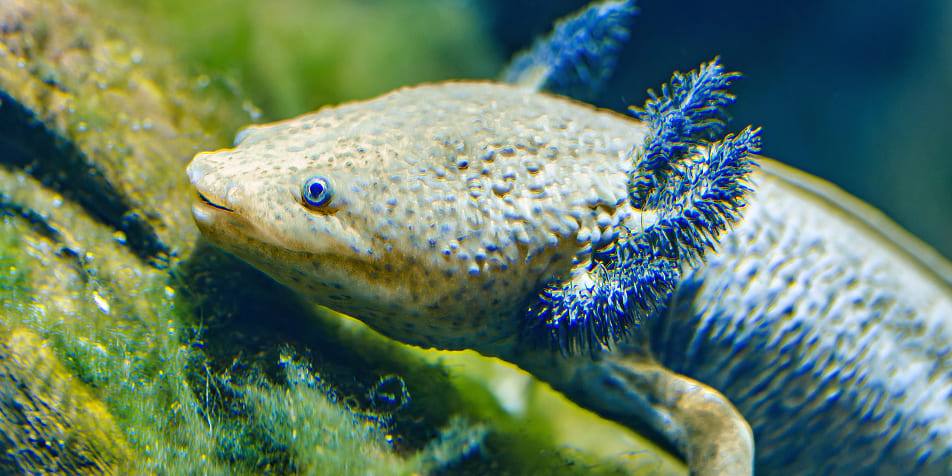
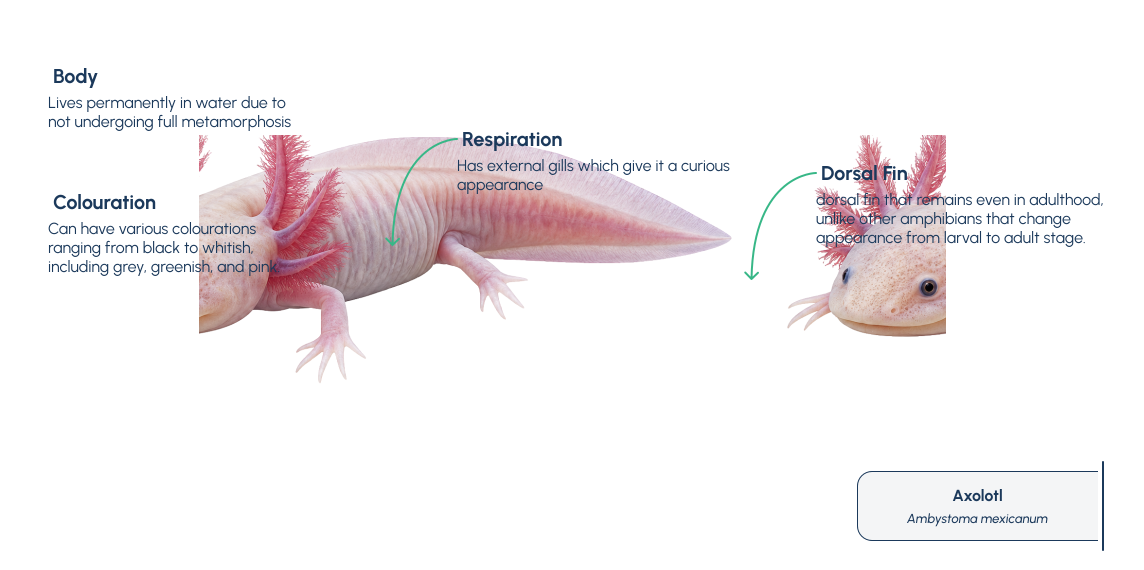
The axolotl’s unusual appearance is due to a biological phenomenon known as **neoteny**, in which its external gills, used for breathing underwater, and its dorsal fin, which allows it to swim agilely, are retained throughout its life. Instead of undergoing a complete metamorphosis into a semi-aquatic or terrestrial adult, as occurs in other amphibians, the axolotl retains its juvenile appearance even as an adult, meaning it lives permanently in water.
Another striking feature of the axolotl’s appearance is the high incidence of albinism. Although axolotls can have dark colours — greyish, greenish and brownish shades that allow them to camouflage themselves among mud and aquatic vegetation — it is common to find individuals with pinkish or whitish colouring.
More similar to other amphibians is the axolotl’s remarkable ability to regenerate its limbs and even vital organs! This makes the species a favourite among scientists studying regenerative medicine.
Axolotls are solitary animals, with little interaction between individuals, except when the “courtship waltz” begins. At the start of courtship, each animal gently touches the other’s cloacal region, just before the tail, in a circular movement that resembles a dance.
In a single clutch, each female frequently lays more than one hundred eggs, which are surrounded by a protective gelatinous layer. Interestingly, the eggs are laid individually, allowing each one to receive the oxygen it needs to hatch, and are attached to substrates such as rocks or floating vegetation. The larvae hatch around two weeks later.
Habitat and diet
In the wild, axolotls inhabit cool, clear waters rich in vegetation, which provide shelter and favourable conditions for hunting. Axolotls are omnivorous, but as they live exclusively in aquatic environments, they mainly feed on small organisms that share this habitat, including fish, larvae and crustaceans.
It is a species endemic to the large central lakes of Mexico. This means that it occurs naturally only in these freshwater bodies in the region around Mexico City, where it has become increasingly rare.
In these lakes, once dotted with floating islands known as “chinampas”, planted by local inhabitants, axolotls found shelter and food. There, they occupied the top of the food chain.