





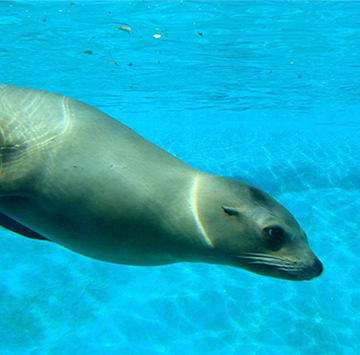
California Sea Lion




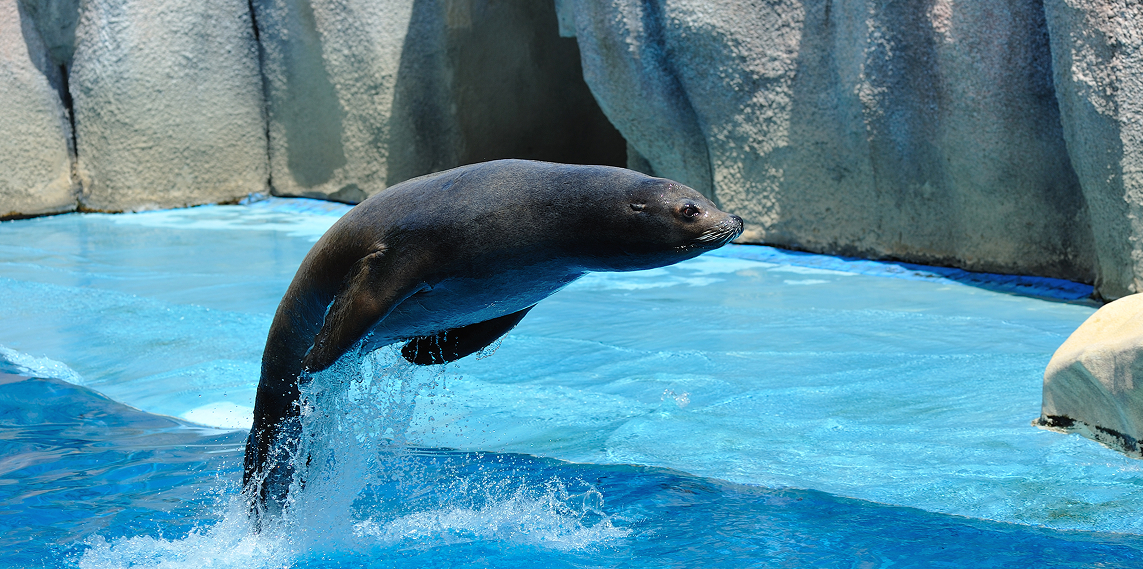
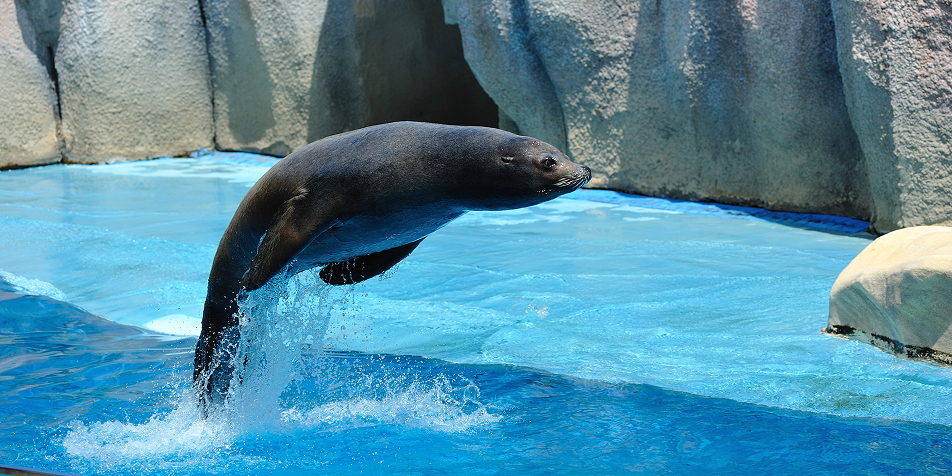
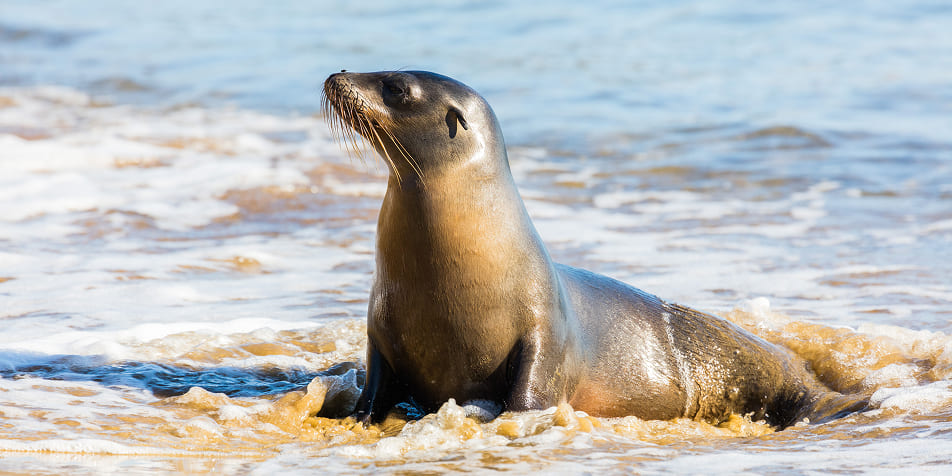
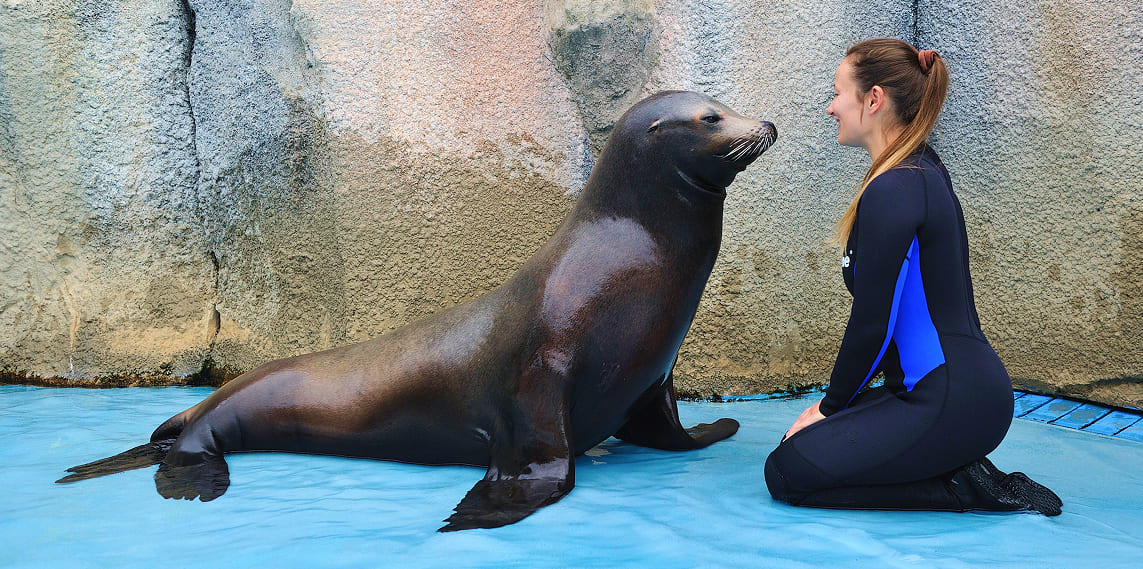
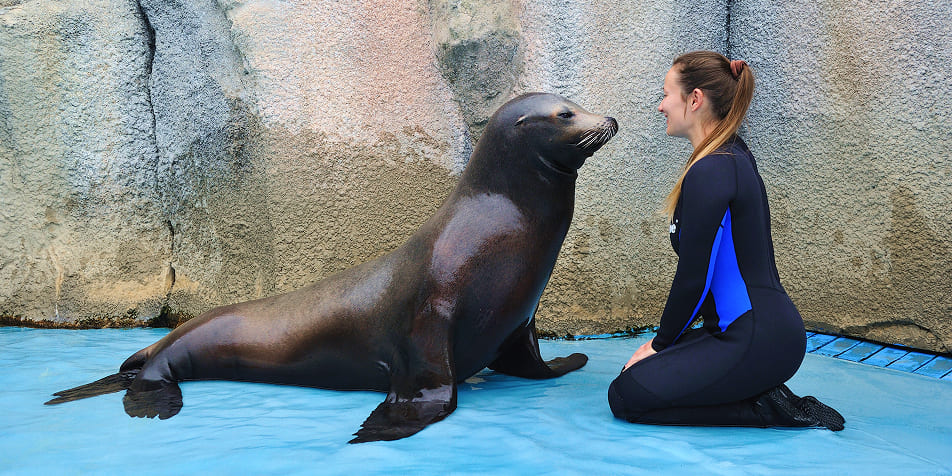
California sea lion: the fastest pinniped
The California sea lion is one of the six species of sea lion in existence.
It is a social animal and a natural swimmer! It is considered the fastest pinniped of all (the group comprising seals, sea lions and walruses), capable of reaching speeds of 32 km/h whilst swimming.
Appearance and behaviour
Pinnipeds are characterised by a large body, the presence of fur, a layer of blubber, or both; a spindle-shaped body; and the ability to move about on land or on ice.
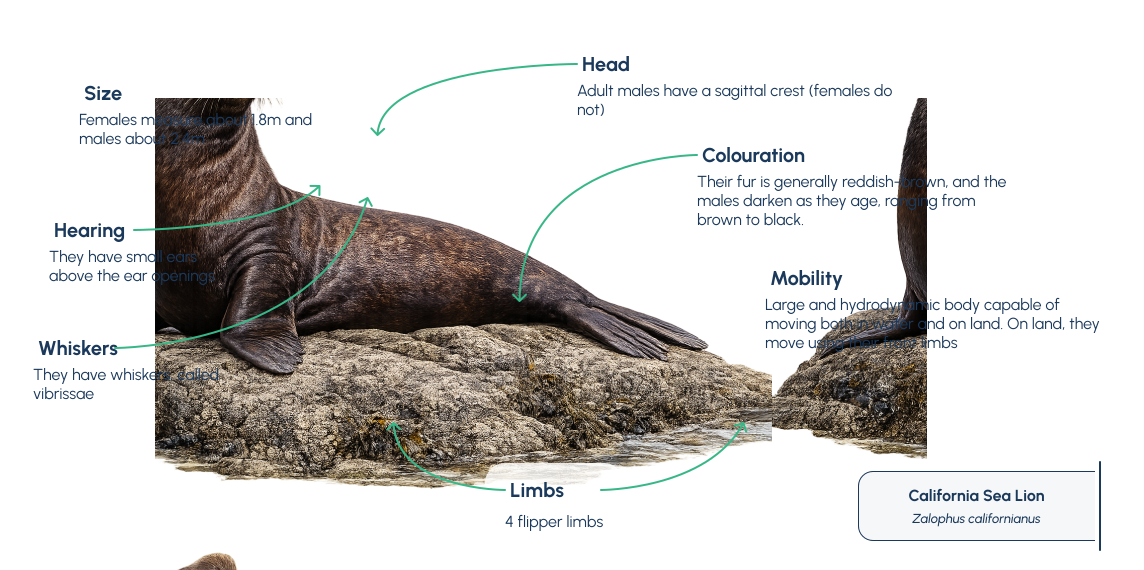
‘Pinniped’ means ‘feather’ or ‘fin-feet’, in reference to the shape of their flippers. They have four flippers, which enable them to walk on land and swim nimbly in the water.
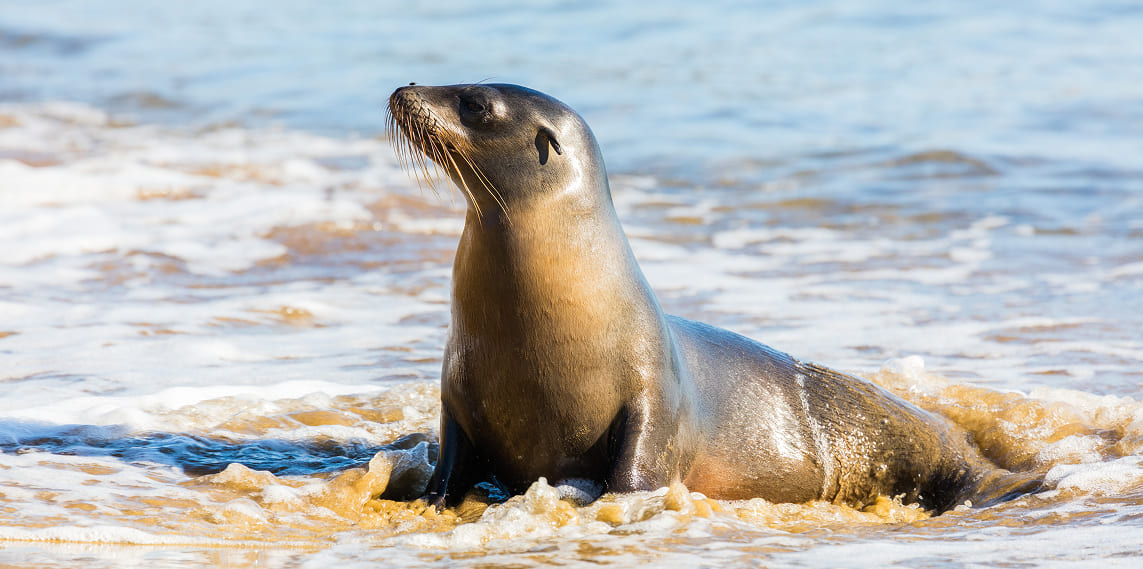
Newborn sea lions are dark brown or black until they moult, when they turn reddish-brown (at 4 to 6 months of age). Females retain this colour, whilst the males’ fur darkens with age. Males can also vary in colour from light brown to black. They are larger than females and have a sagittal crest – a protrusion on the top of the head – which indicates dominance. The larger the sagittal crest, the more dominant the male.
Sea lions have a small ear above each ear.
Habitat and diet
California sea lions, which live in temperate and tropical climates, inhabit a variety of habitats on islands and the mainland. These animals live in coastal areas, such as beaches or bays, but can also be spotted on man-made structures, such as docks, harbours, marinas, jetties and even buoys.
They feed on a variety of prey, such as squid, mackerel, sardines, salmon, hake, etc. They usually feed individually or in small groups and have even been seen hunting alongside cetaceans and seabirds when large schools of fish are present.