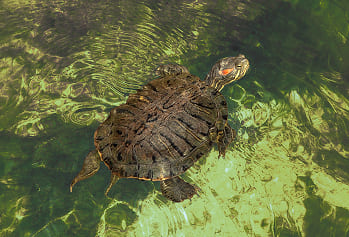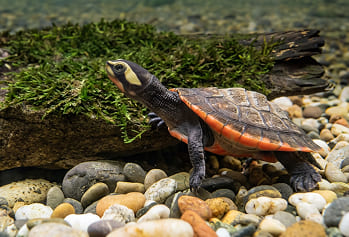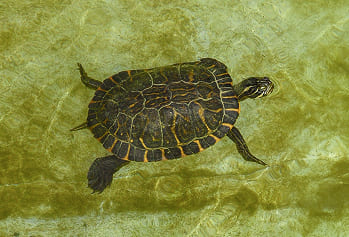






European pond turtle




European Pond Turtle: an (almost) all-terrain turtle
A species native to Portugal, the European Pond Turtle (*Emys orbicularis*) moves between water and land. It is recognisable by its yellow markings and, in winter, it hibernates when temperatures drop.
As a species native to Portugal, Porto d’Abrigo can receive European Pond Turtles for rehabilitation and their subsequent return to the wild.
Discover more about this species!
Appearance and behaviour
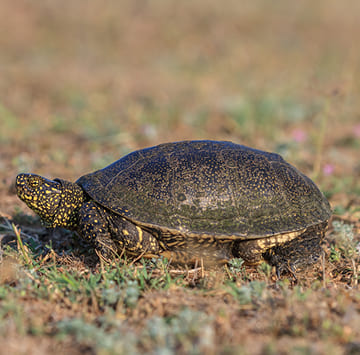
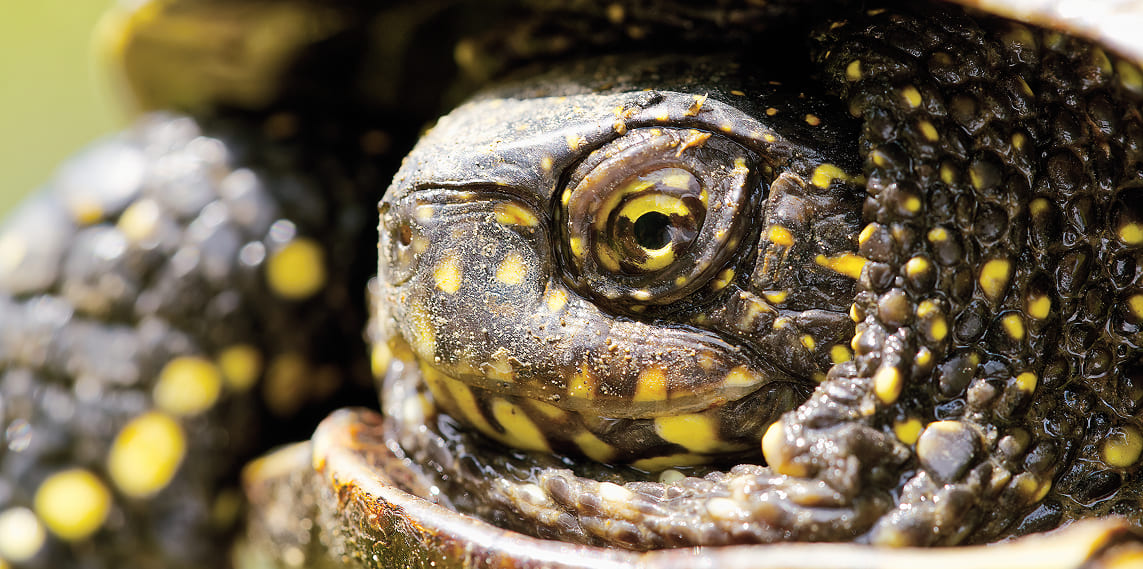
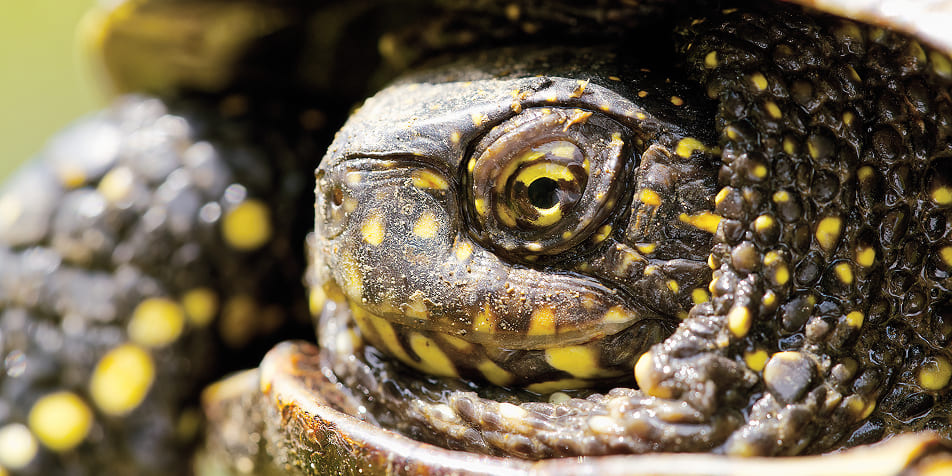
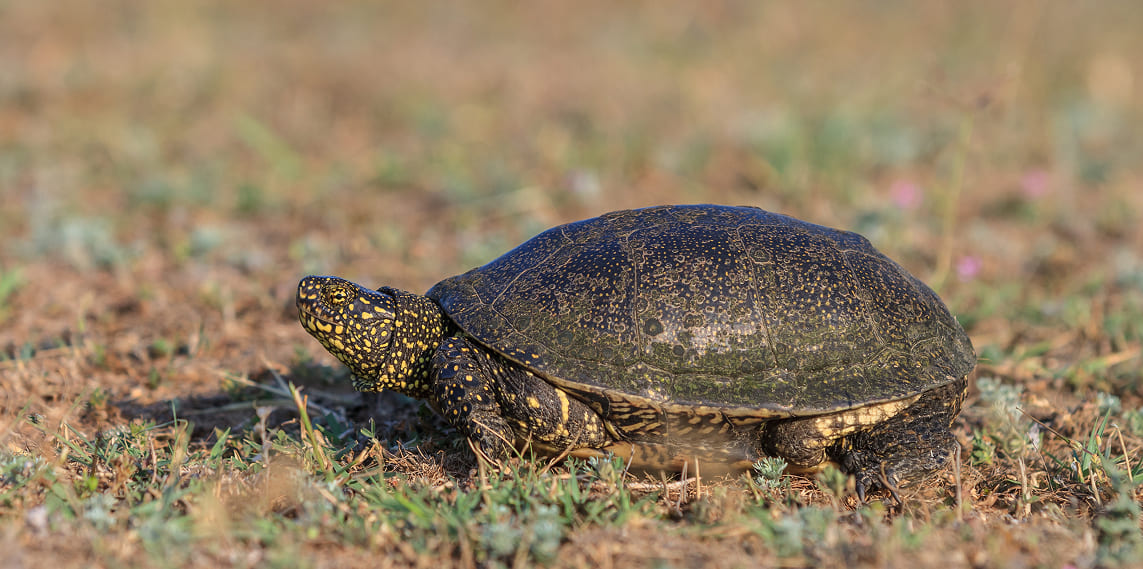
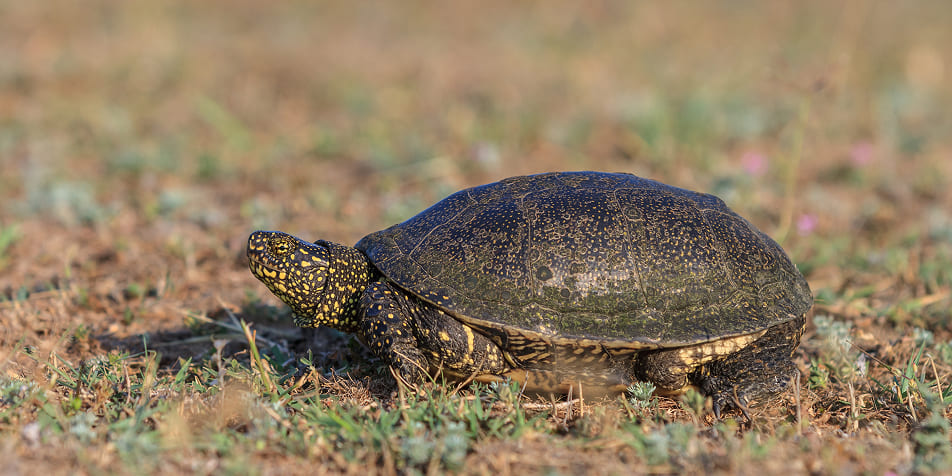
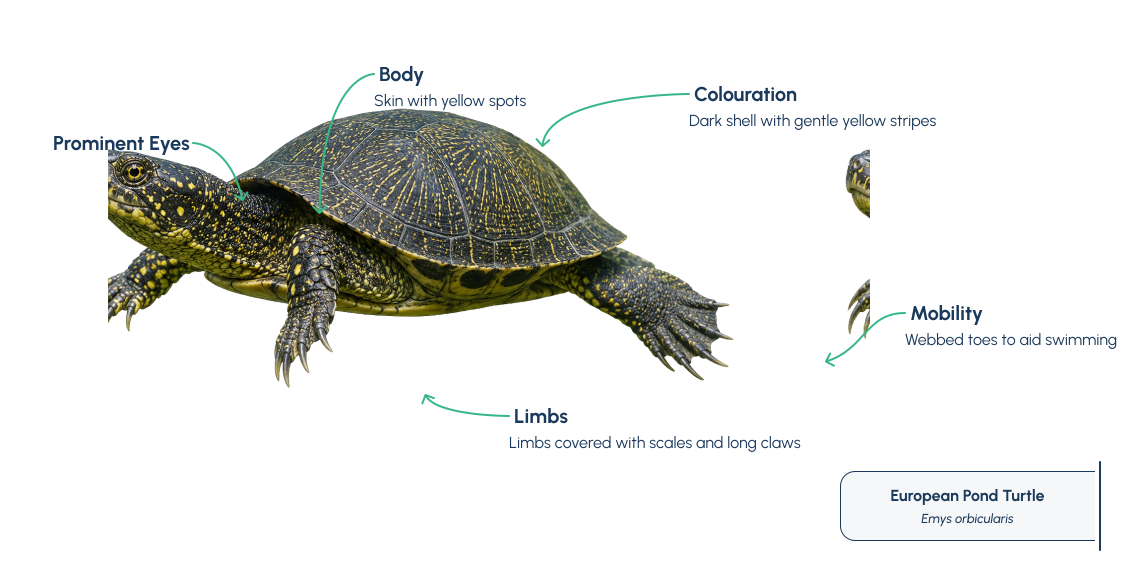
The common name of this turtle is related to its appearance: its shell is dark and marked with subtle yellow streaks. Its skin is also dark and covered with yellow spots. The Latin scientific name *orbicularis* refers to its relatively prominent eyes in relation to the skull.
Females are slightly larger and heavier than males, although males have a more concave plastron (the underside of the shell), which gives them greater mobility. In both sexes, the limbs are robust, with scales, long claws and webbed toes. The front feet have five toes, while the hind feet have only four.
European Pond Turtles can hibernate when temperatures drop, although they may remain active throughout the year in warmer regions.
In Portugal, they typically hibernate when temperatures fall below 14°C.
Habitat and diet
This semi-aquatic reptile lives in a wide variety of natural and artificial bodies of water, swimming in ponds, salt marshes, streams and lagoons, while also travelling across large areas of land, moving several kilometres around water bodies and “climbing” small rocks to bask in the sun.
Aquatic environments are used most often — for feeding, movement and reproduction — but on land, these turtles seek shelter and warmth to regulate their body temperature. It is also on land that females lay their eggs.
Females dig a hole away from the water, around 10 cm wide and deep, where they lay their small eggs, which incubate for 80 to 100 days. Although clutches can contain more than a dozen eggs, not all of them hatch, and hatchlings have a high mortality rate: it is estimated that only 1 in 100 reaches adulthood. This, combined with the females’ late sexual maturity and low fertility rates, makes the species more vulnerable.
For food, the European Pond Turtle mainly relies on aquatic invertebrates, although its diet may also include other animals (amphibians, small fish and terrestrial insects) and even vegetation.