





Grey Seal




Grey seal: guardian of the Atlantic coasts
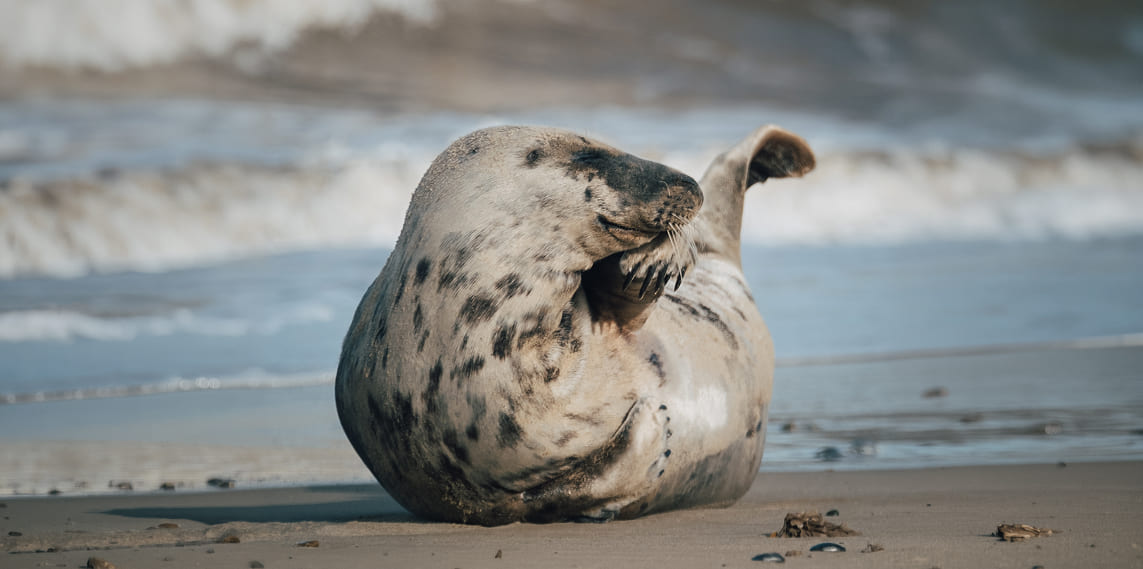
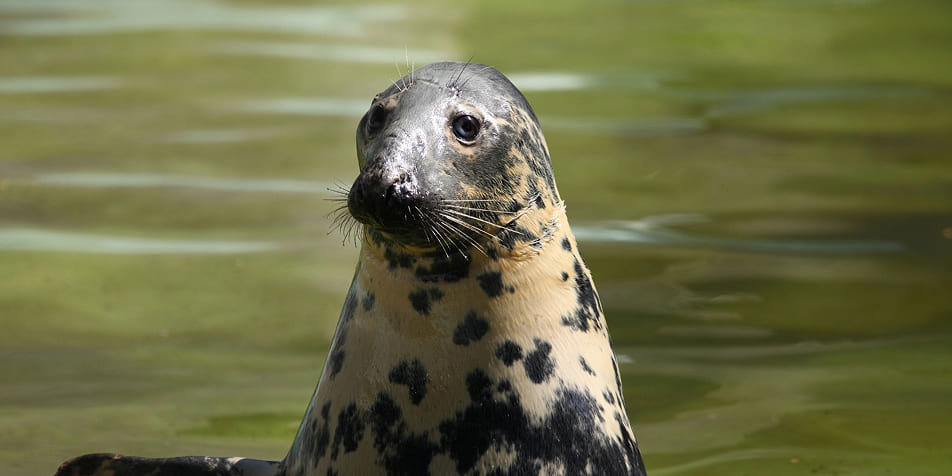
This is an abundant species found along the North Atlantic coast. The grey seal is a robust, elongated marine mammal, perfectly adapted to life at sea.
Grey seals gather in large groups during the breeding, pupping and moulting seasons. During the rest of the year, they can be found alone, in small groups or in large aggregations, both on land and at sea.
Appearance and behaviour
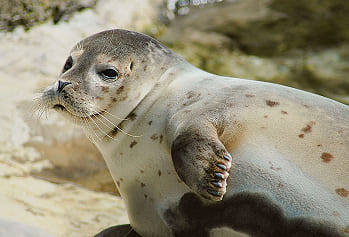
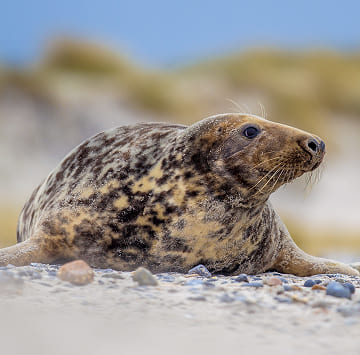
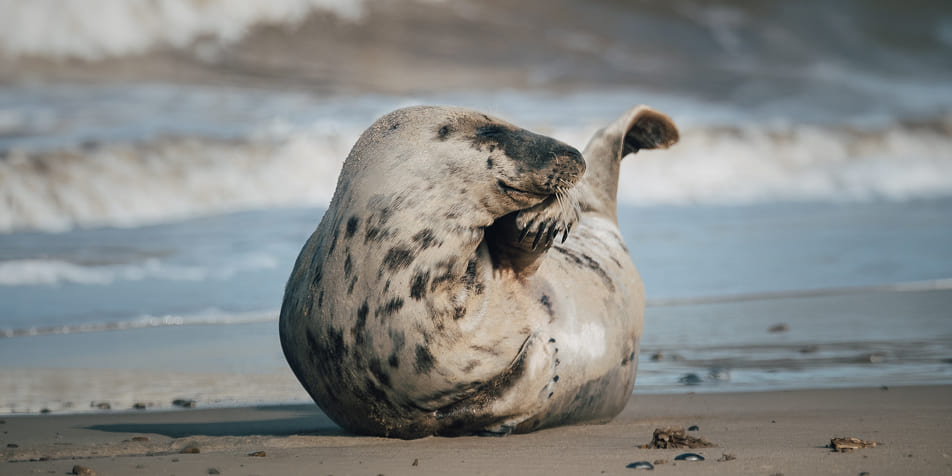
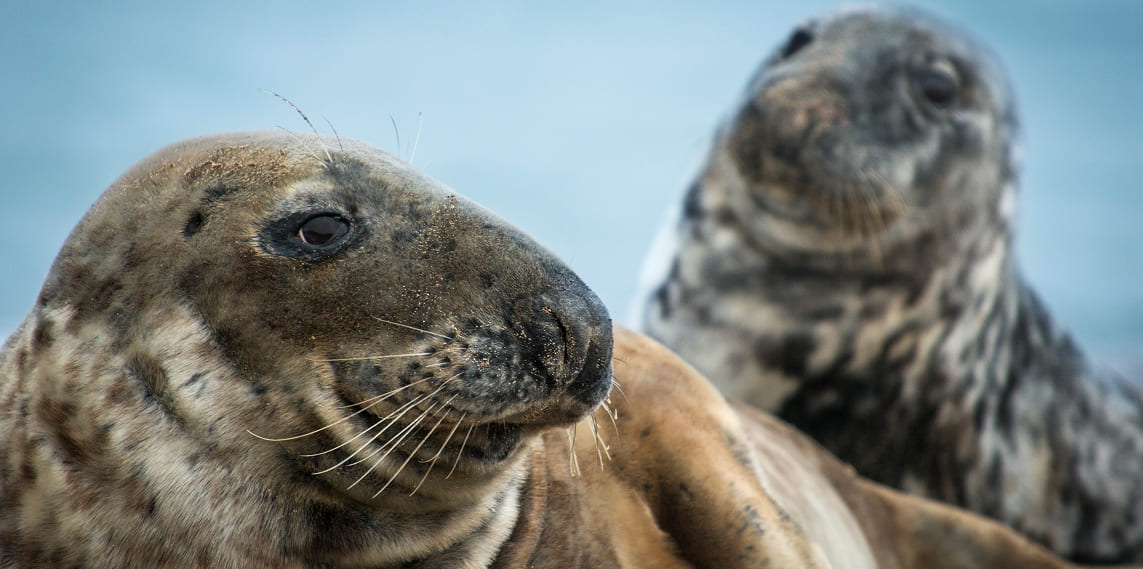
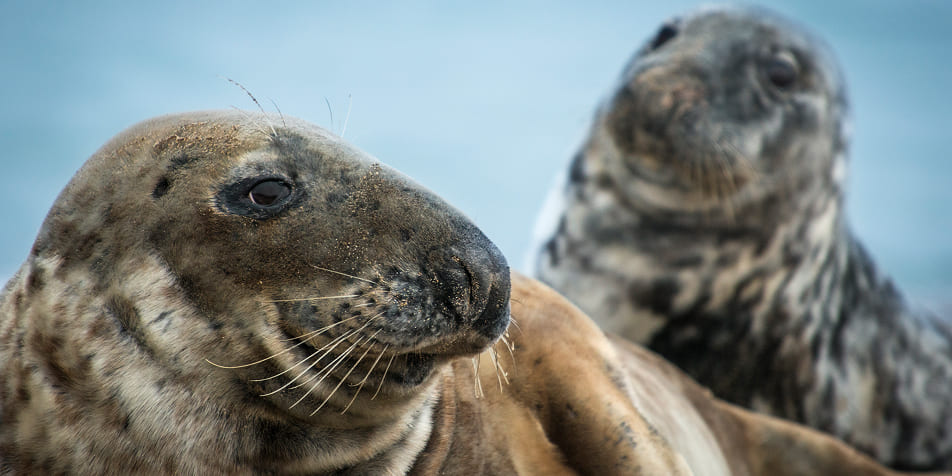
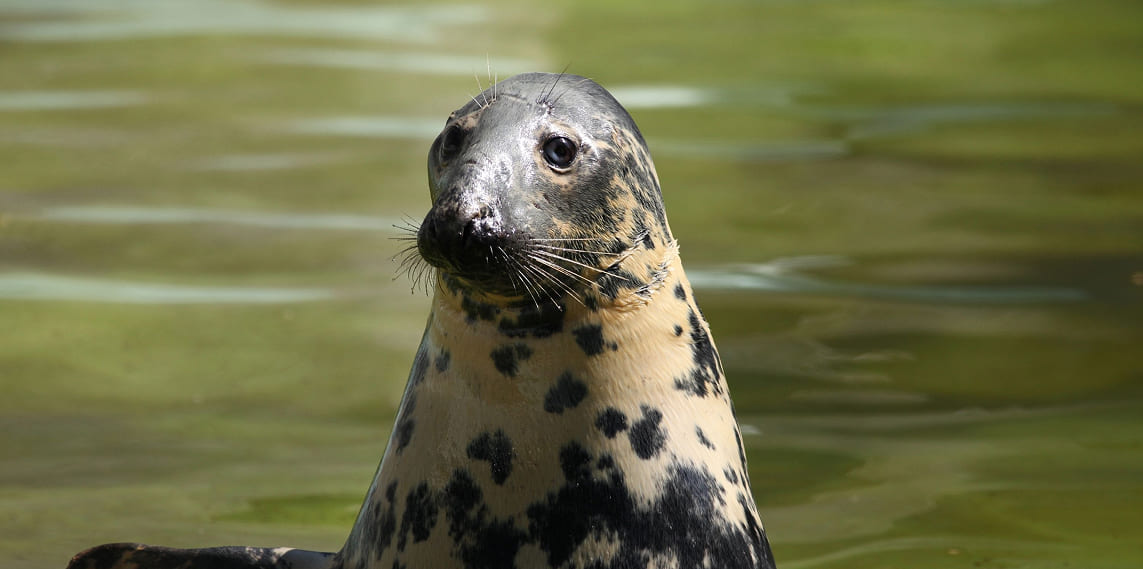
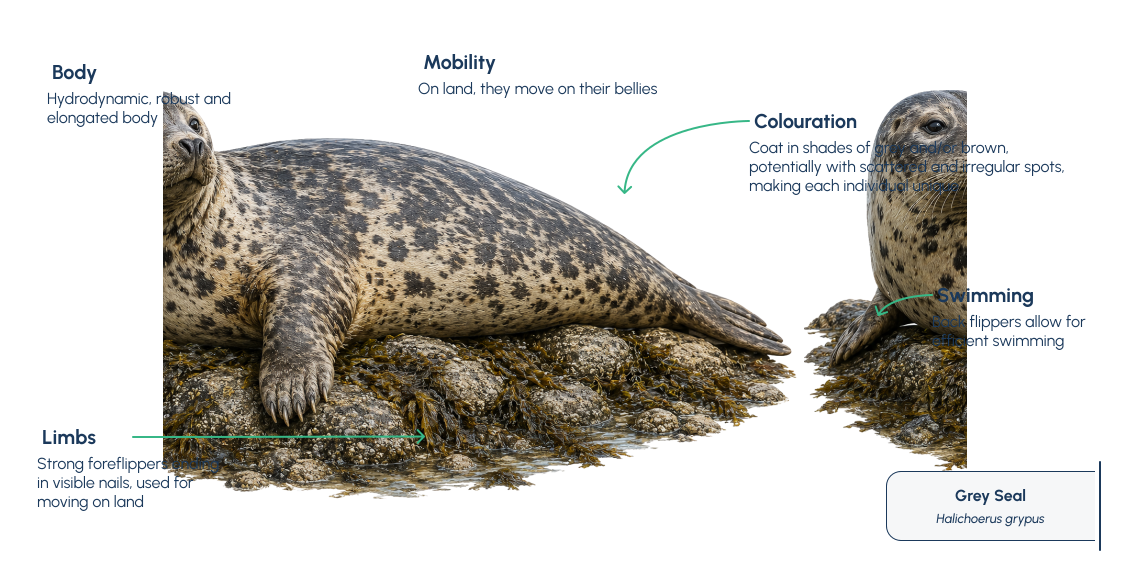
Its coat ranges from silvery grey to brown, and may feature scattered, irregular markings that make each individual unique.
It is also known as the horsehead seal, due to the elongated and robust shape of its head, which is particularly prominent in males.
The foreflippers are strong and end in visible claws, which are used for moving on land, while its streamlined body and hind flippers allow it to swim efficiently.
Males tend to be larger and darker, while females are smaller and usually lighter in colour.
The pups are born completely white, with this coat being known as lanugo. This colour helps absorb sunlight, keeping the young seals warm.
Habitat and diet
Their habitats are varied, including rocky coasts, islands, sandbanks, ice shelves and icebergs.
Grey seals spend much of their time at sea, as they need to dive to feed, but they return to the same habitats on land.
These animals are effective predators, thanks to their excellent eyesight and hearing. Their diet consists of fish, cephalopods and crustaceans.