





Saker falcon





Saker falcon: the fastest of the skies
A bird of prey and a species widely used in falconry, the saker falcon is an expert at fast and precise flight, particularly when soaring through the skies and, above all, during its hunting technique of diving at high speed.
Discover more about this species!
Appearance and behaviour
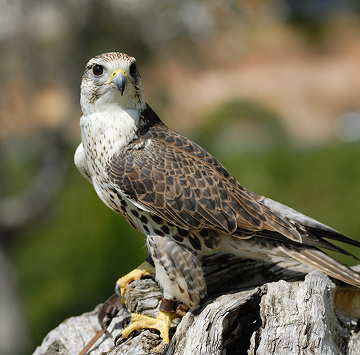
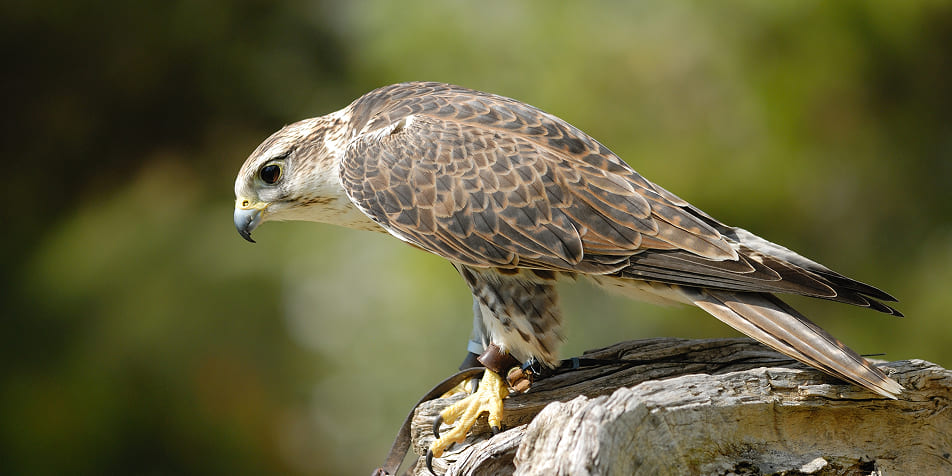
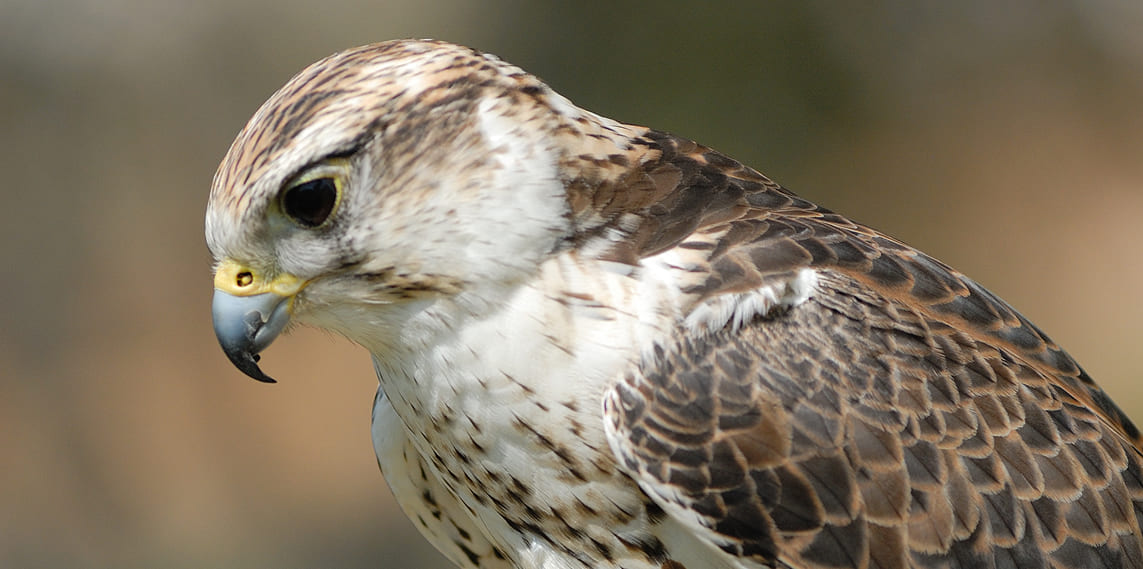
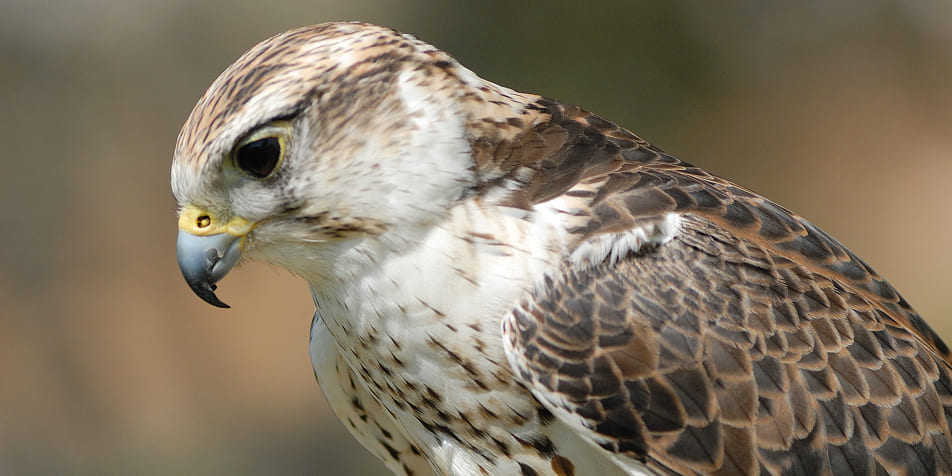
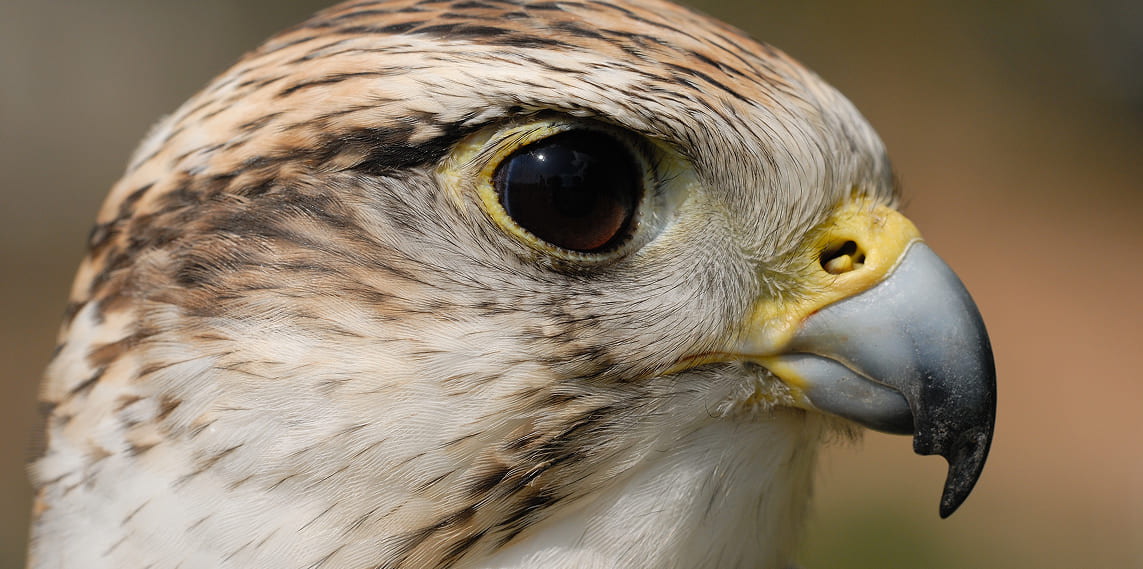
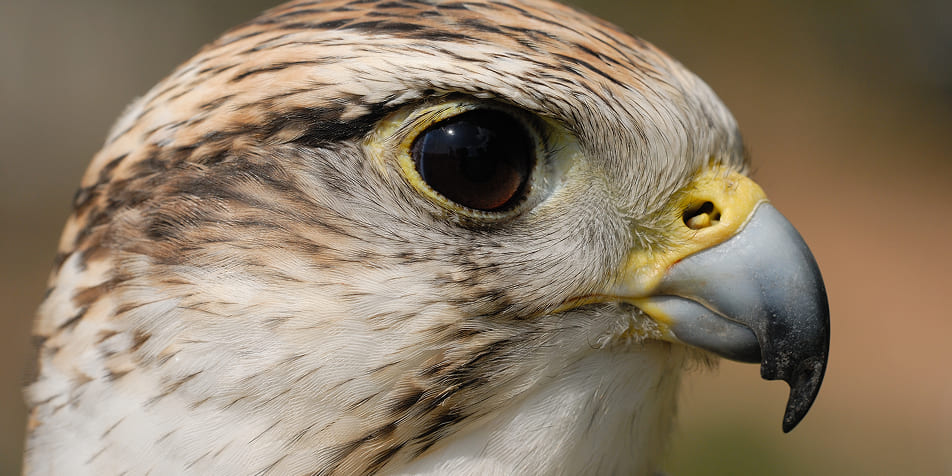
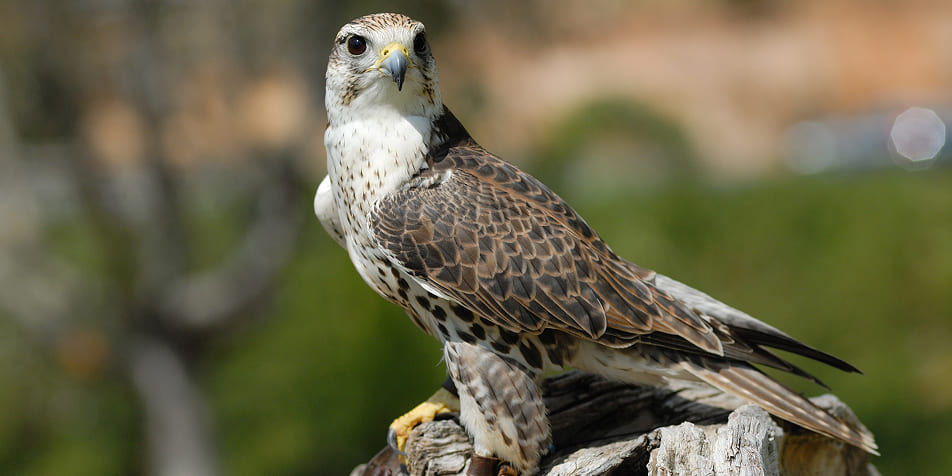
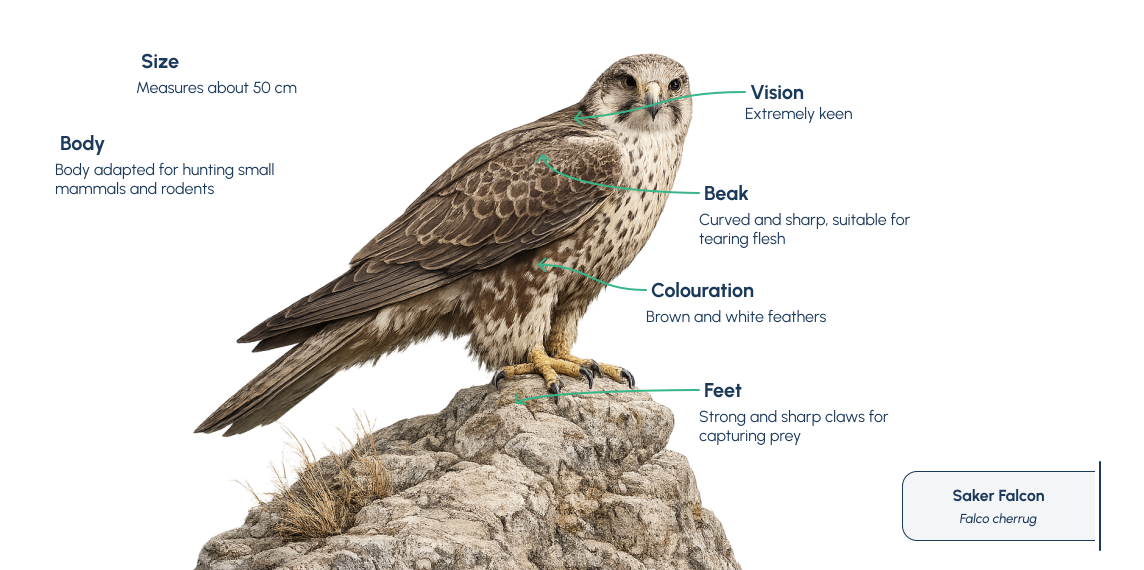
This is a large falcon, with an average height of around 50 centimetres, the saker falcon has brown and white plumage.
Like most falcons, this species does not build its own nest. Instead, it may use old nests built by other birds or other sites located on top of abandoned buildings, bridges, electricity pylons or rocky cliffs. Each brood consists of around 3 to 5 chicks, which are ready to fly after approximately 40–45 days.
The saker falcon is a diurnal bird of prey, sharing some key characteristics with this group: its body is adapted for hunting, with exceptionally sharp eyesight (even over long distances), strong, sharp talons (which allow it to capture and hold prey) and a curved, sharp beak, suited to tearing and ripping flesh.
Habitat and diet
The species can be found in the wild across extensive areas of Europe, Asia and North Africa. This distribution has made the saker falcon a popular bird for falconry, particularly in Arab falconry. It prefers steppes and grasslands, but can also be found in other dry habitats with scattered trees and cliffs.
A carnivore, the saker falcon specialises in hunting small mammals and some medium-sized birds (the latter particularly in areas where mammals are less readily available). It is a natural hunter close to the ground in open terrain, and its body is particularly well adapted for this activity, combining rapid acceleration, endurance and a high degree of manoeuvrability.
As an apex predator, the saker falcon and other birds of prey play an essential role in ecosystems, helping to control prey populations and maintain ecological balance.