





Linnaeus's two-toed sloth




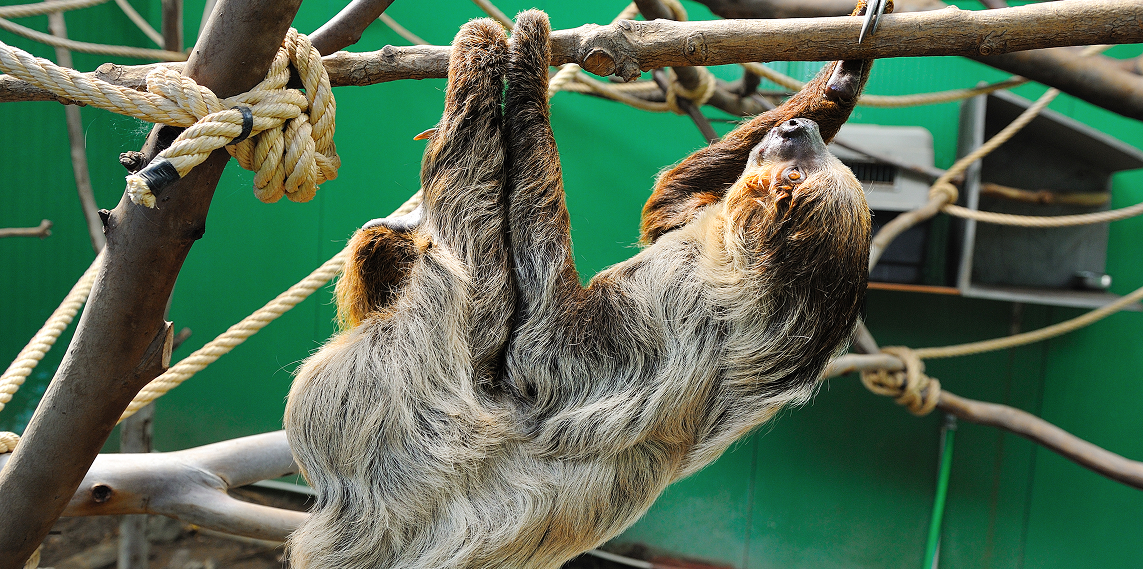
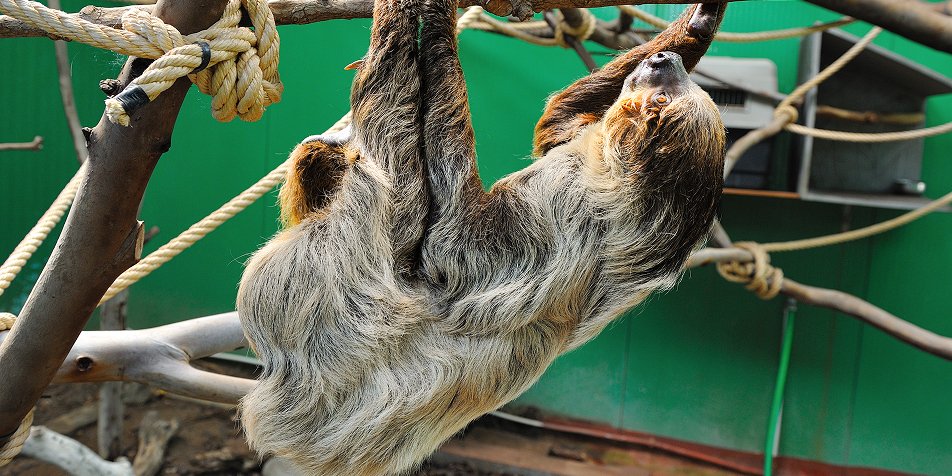
Two-toed Sloth: a master of the art of
'slow-living'
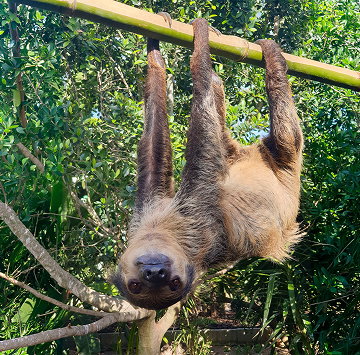
TheLinnaeus’s Two-toed sloth is a terrestrial mammal and one of the six species of sloth in the world. It spends most of its life hanging from tree trunks, sleeping, and its body is therefore completely adapted to this way of life. And it is at the tops of the trees that sloths do everything: they feed, sleep, mate and give birth.
Appearance and behaviour
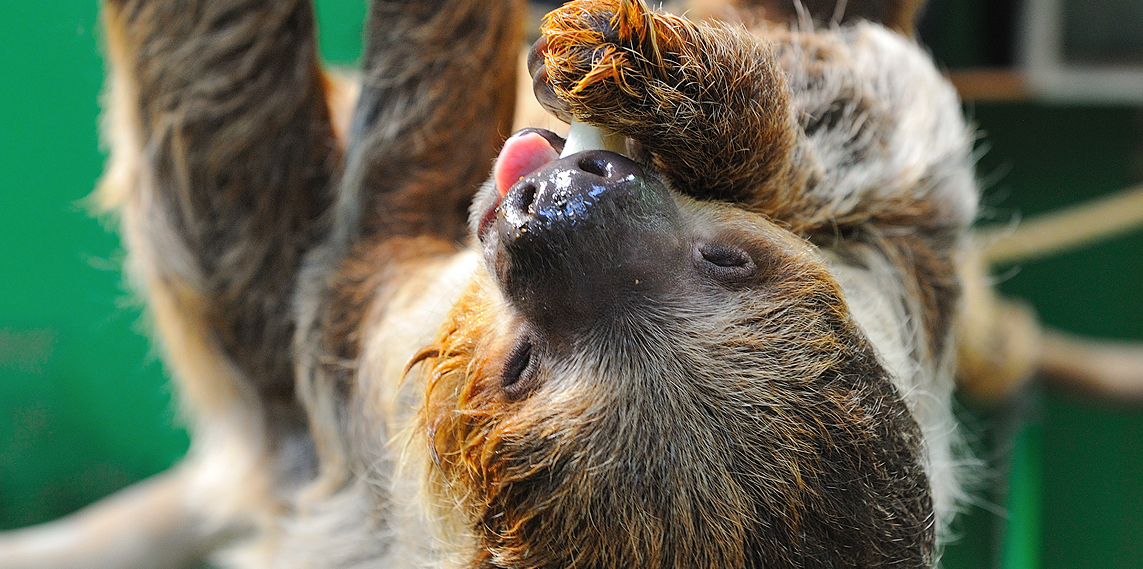
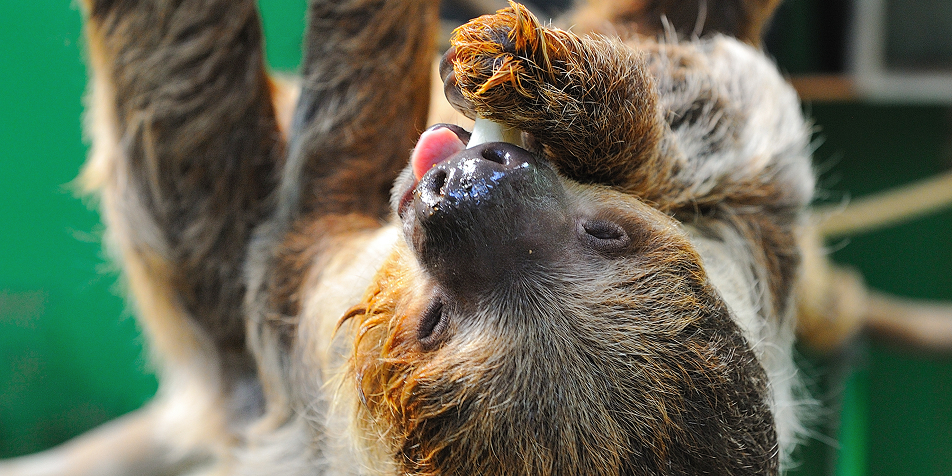
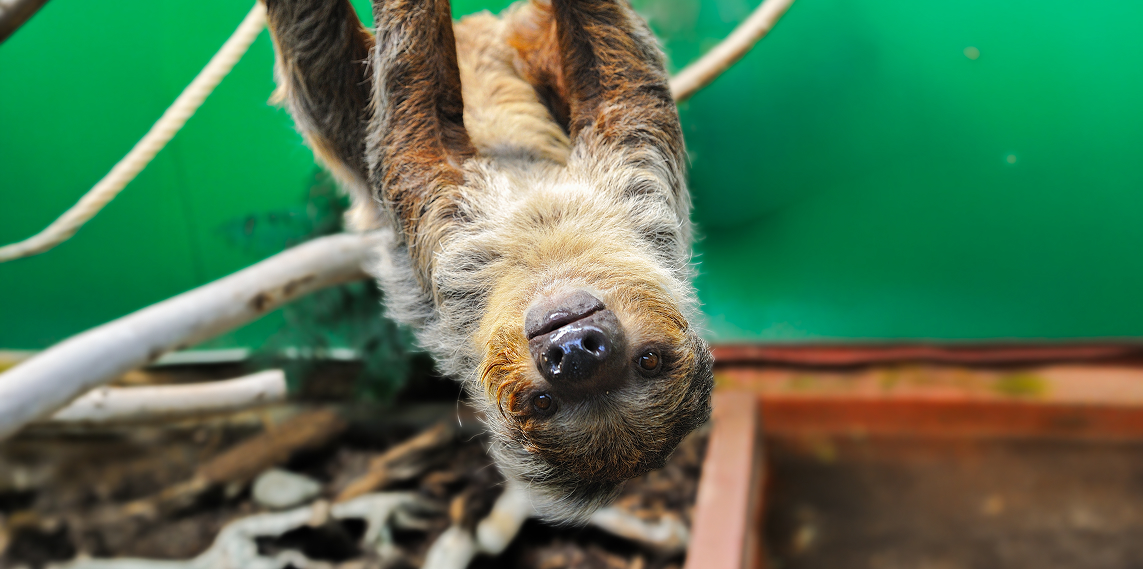
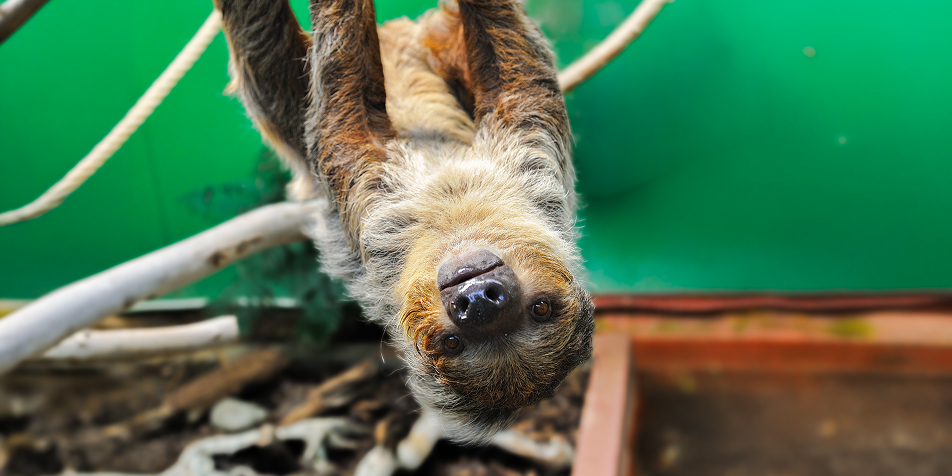
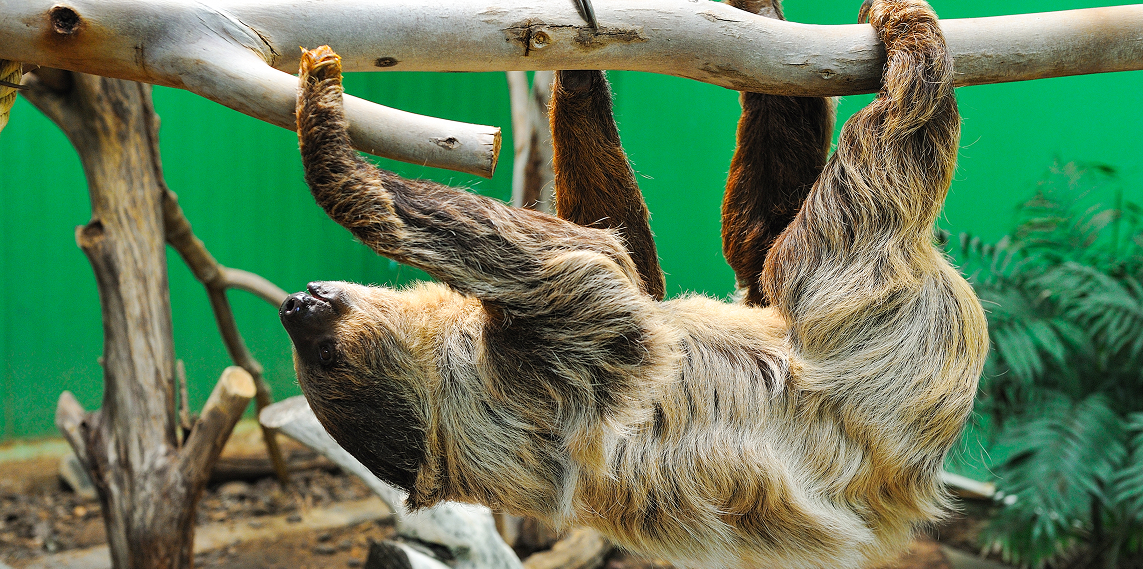
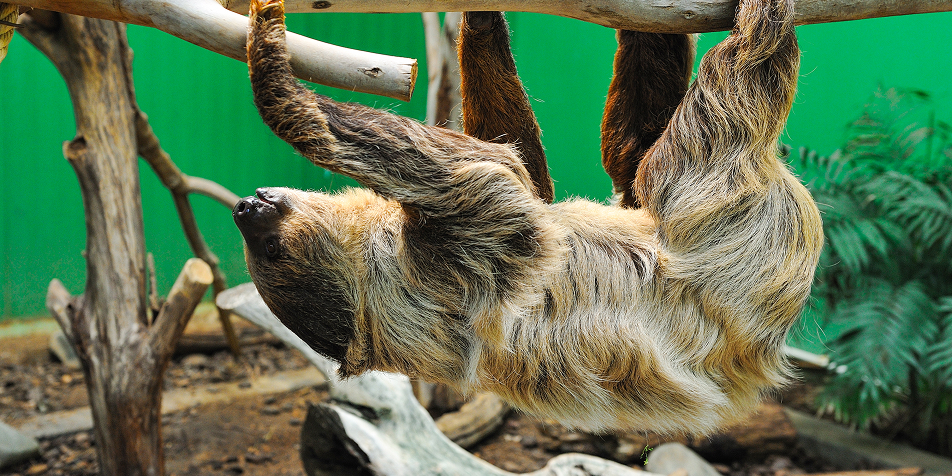
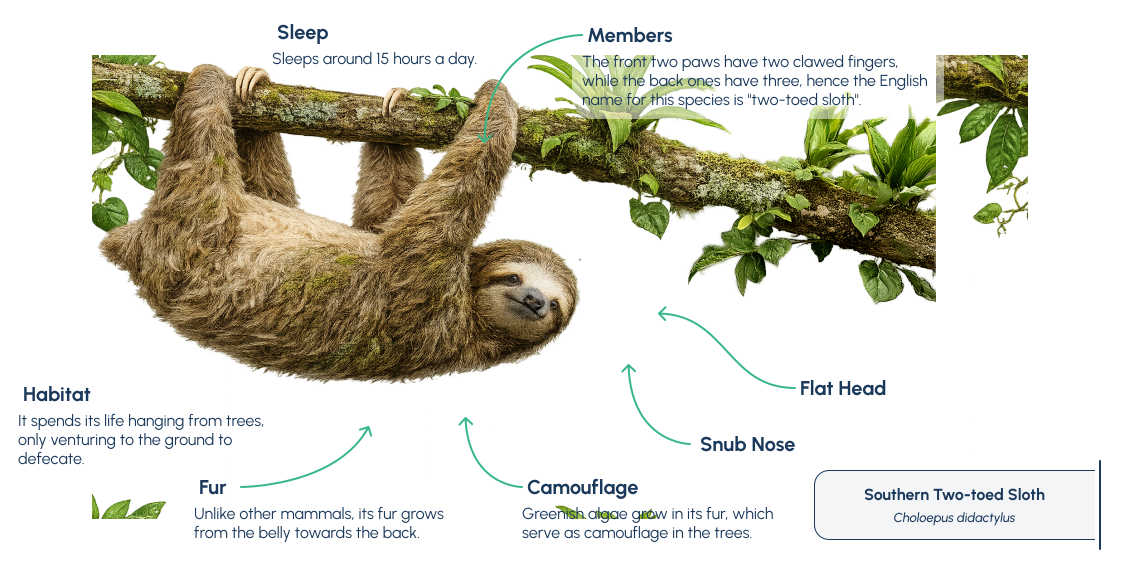
The different groups of sloths can be easily identified by the number of long, curved claws they have on their front paws. The giant sloth has a flattened head, an upturned snout and four long limbs; the front limbs end in two toes, each with two curved claws measuring between eight and ten centimetres – a characteristic that distinguishes the two-toed sloth from other species. The hind limbs have three toes, like the other sloth species.
This animal blends in easily amongst the trees, and the secret also lies in its fur, which grows from the belly towards the back, allowing rain to run off more easily and preventing it from getting soaked. Another advantage is that the royal sloth’s fur has grooves in which blue-green algae grow, giving it a greenish hue that is perfect for hiding amongst the leaves from predators. The fur also harbours moths, butterflies, ticks and beetles – a veritable living ecosystem.
The two-toed sloth spends its days hanging from a tree, motionless or moving very slowly amongst the branches. An expert in slow living and energy conservation, the royal sloth sleeps for around 15 hours a day and only wakes at night to feed. Its body temperature ranges between 30 and 34°C and drops during the night on rainy days; its muscle mass is very low.
Habitat and diet
The two-toed sloth feeds mainly on leaves and fruit, which have a very low energy content, and its metabolism is extremely slow, meaning that the digestion process can take days or even weeks.