





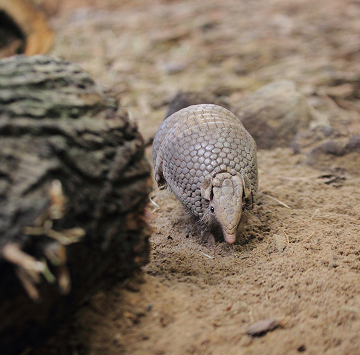
Southern Three-banded Armadillo



Southern Three-banded Armadillo: the acrobat
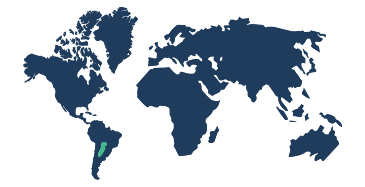
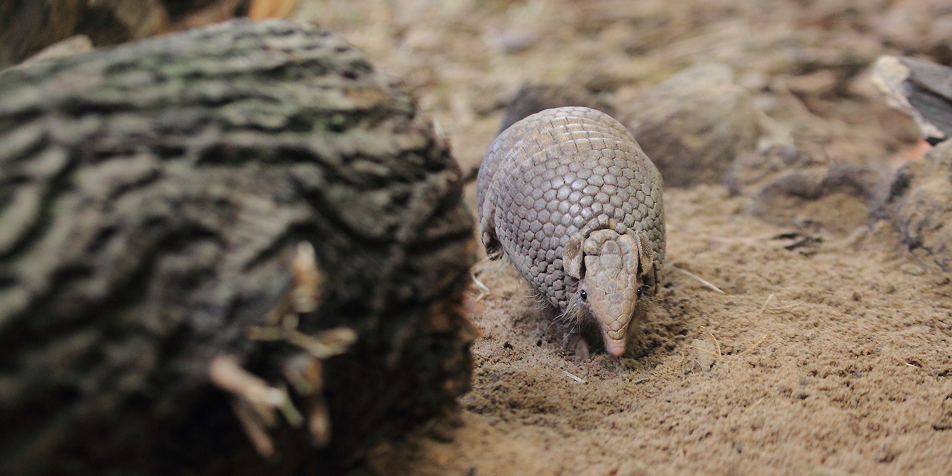
The Southern Three-banded Armadillo is a small mammal native to South America, unique in the animal kingdom for its extraordinary ability to curl up into a perfect ball when it feels threatened.
Ironically, this method of self-defence makes it easy to catch, as it is unable to escape.
Appearance and behaviour
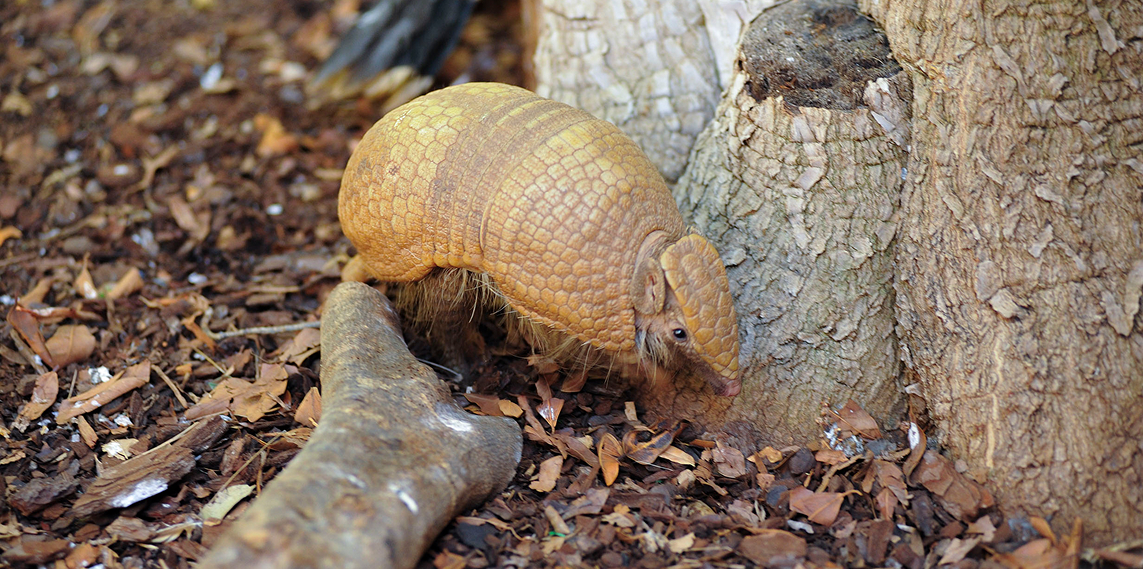
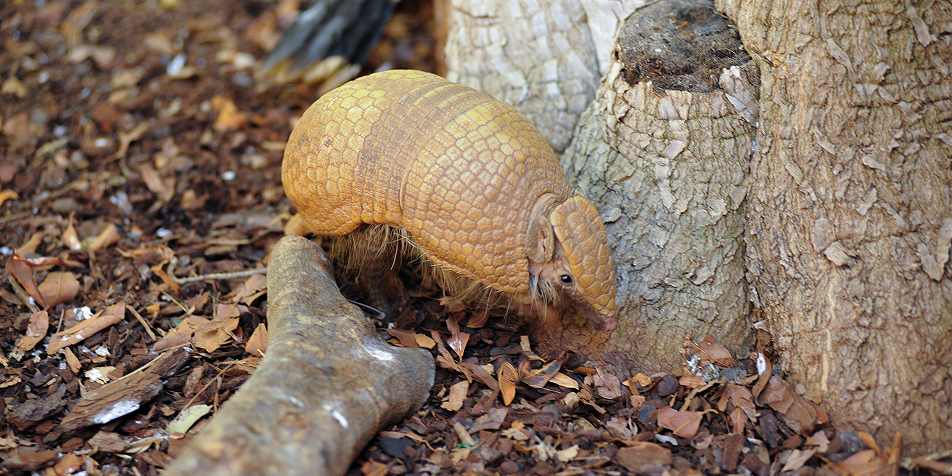
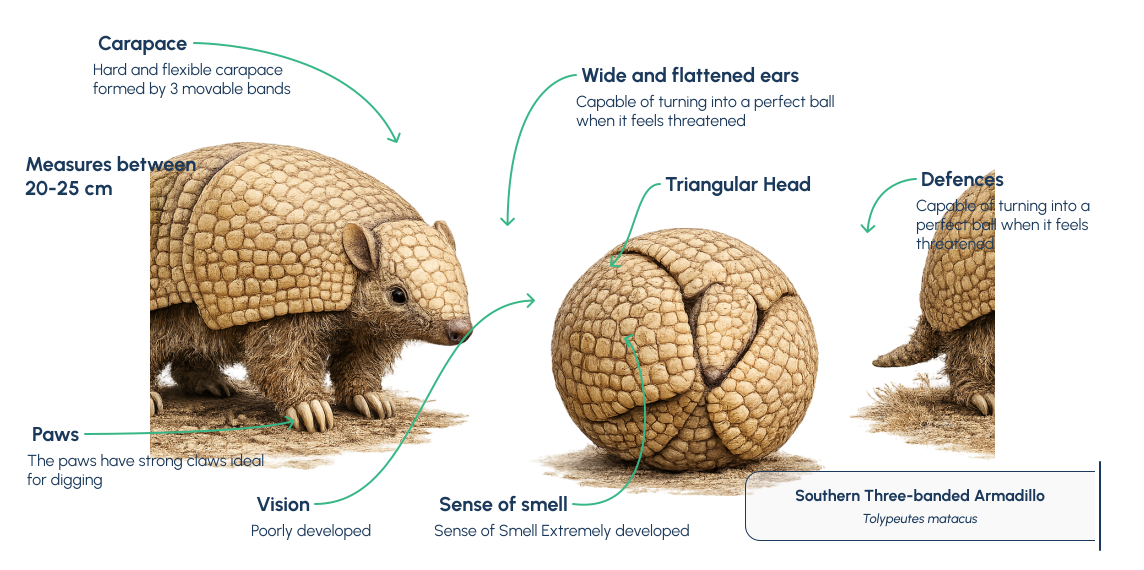
With its three movable bands on its shell, this animal – measuring just 20 to 25 centimetres and weighing between one and two kilograms – is able to curl up completely into a ball, leaving only a small gap which closes rapidly should a predator get too close.
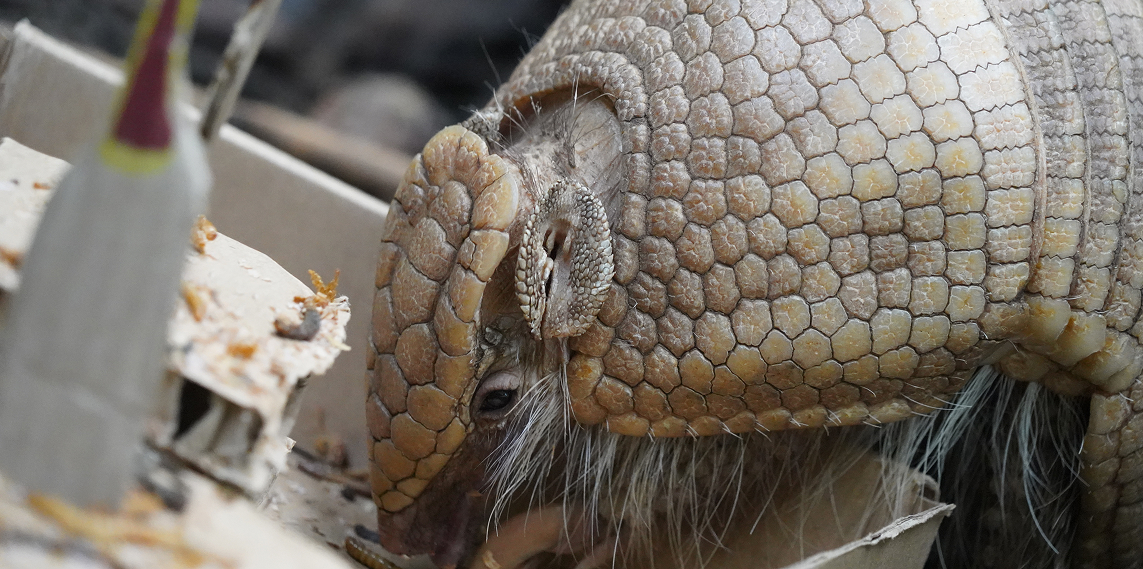
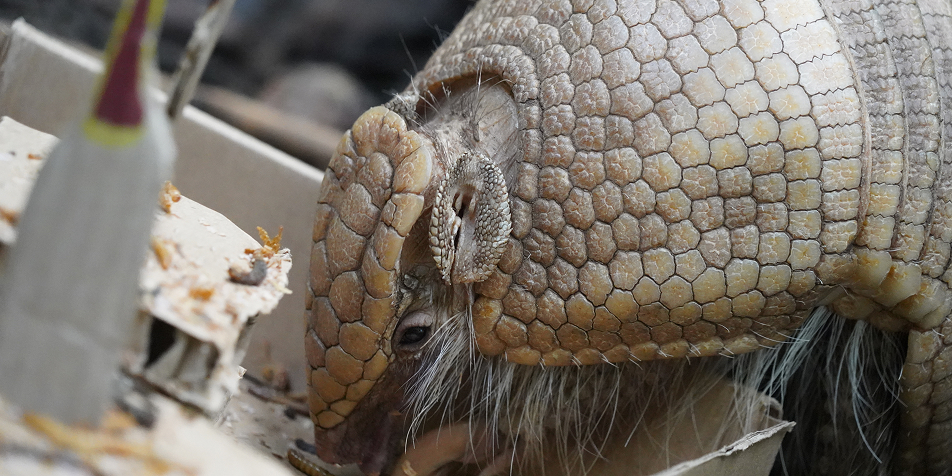
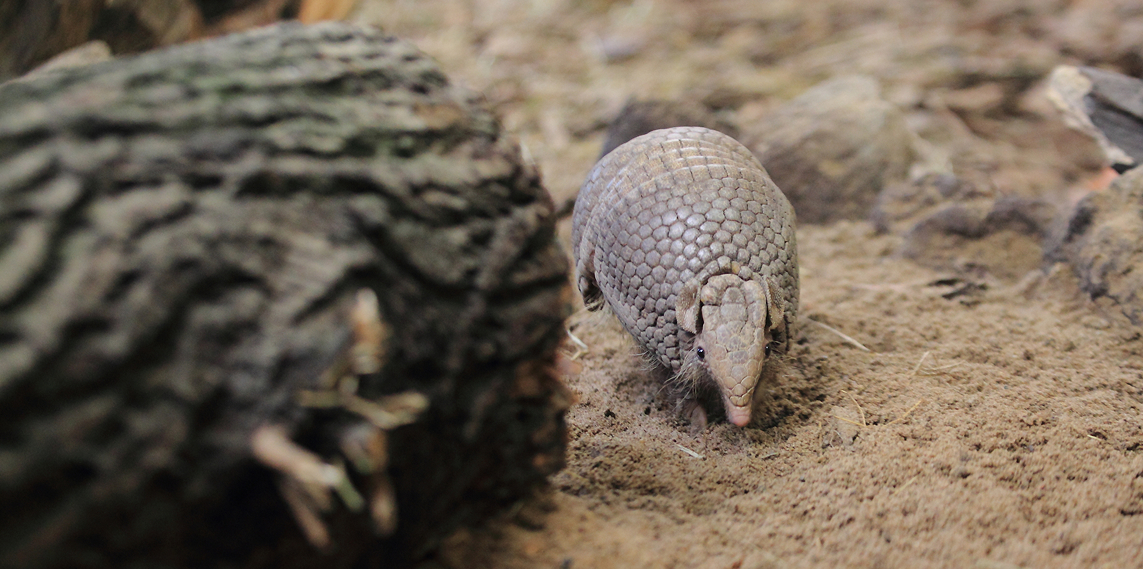
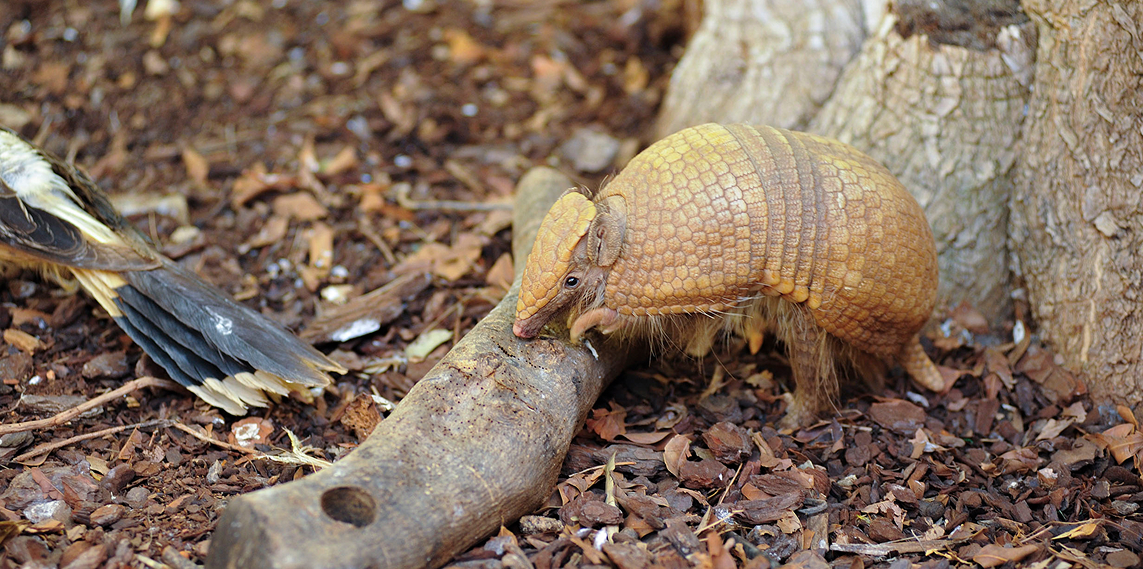
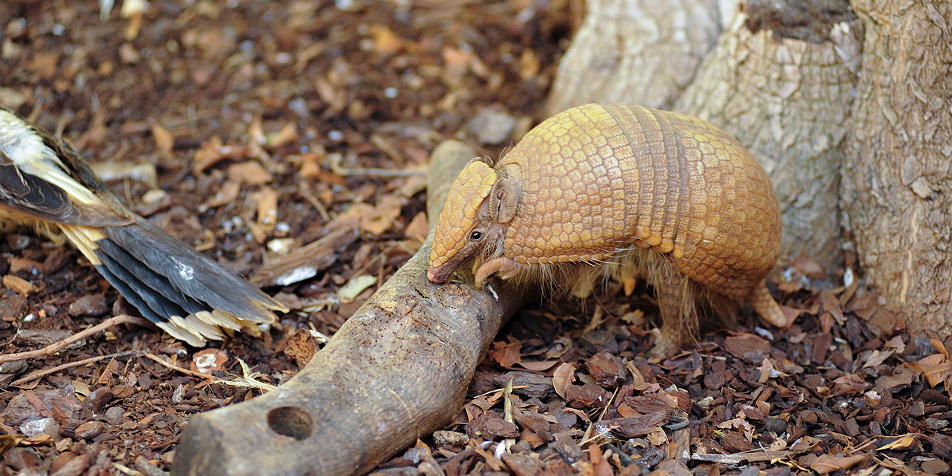
The three-banded armadillo has a hard, flexible, brownish-yellow shell that extends from its neck almost to its feet, divided into three movable segments that act as hinges. This armour is made of bony plates covered in keratin, the same protein that forms our fingernails. The triangular head is robust, the ears are broad and slightly flattened, and the feet have strong, curved claws ideal for digging.
Unlike other armadillos, this species spends more time above ground and is not as underground-dwelling. It prefers to use abandoned burrows of other animals, such as anteaters, or to hide in dense vegetation. Although its eyesight is not very keen, it compensates with an exceptionally keen sense of smell that enables it to locate food buried in the ground.
Habitat and diet
With an opportunistic diet, the three-banded armadillo feeds mainly on small insects and invertebrates, particularly ants, termites and beetle larvae. It uses its claws to dig into insect colonies or under the bark of decaying trees. During the wet season, it supplements its diet with fruit and occasionally seeds, adapting to the resources available at different times of the year.