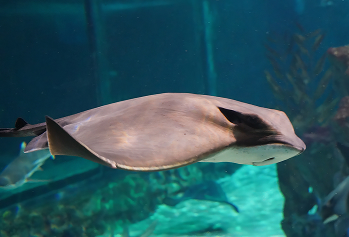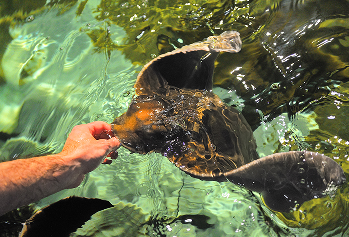







Blackchin guitarfish






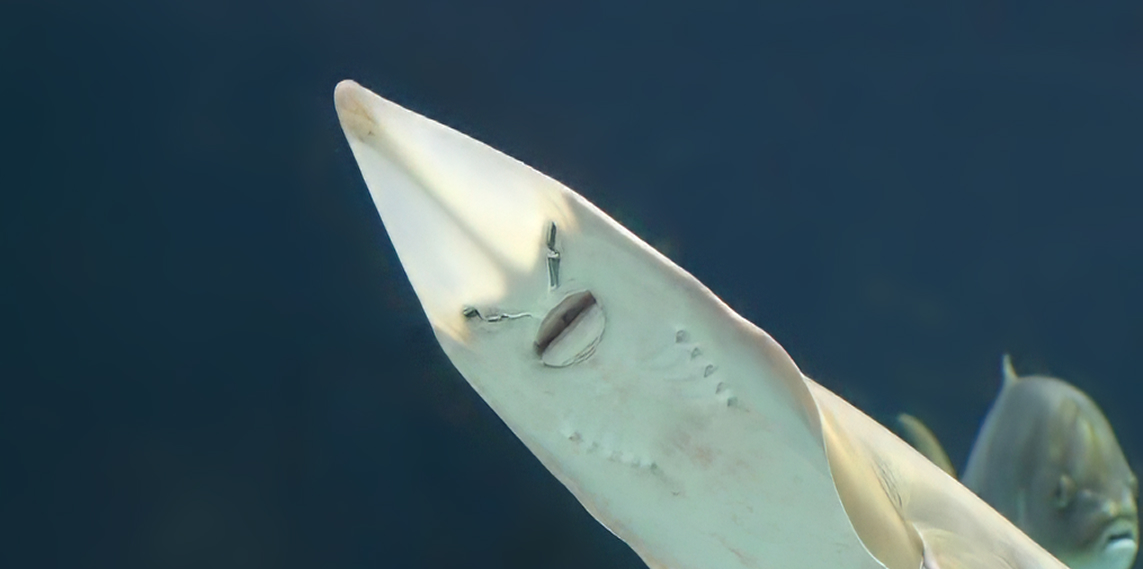
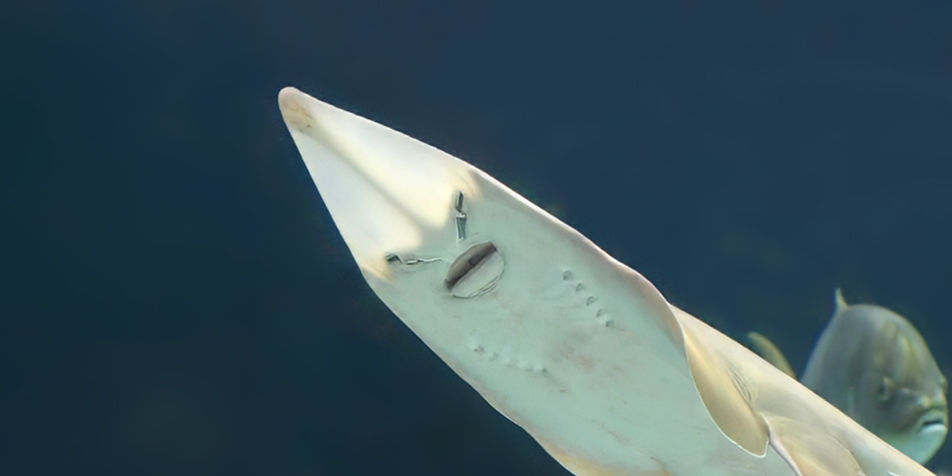
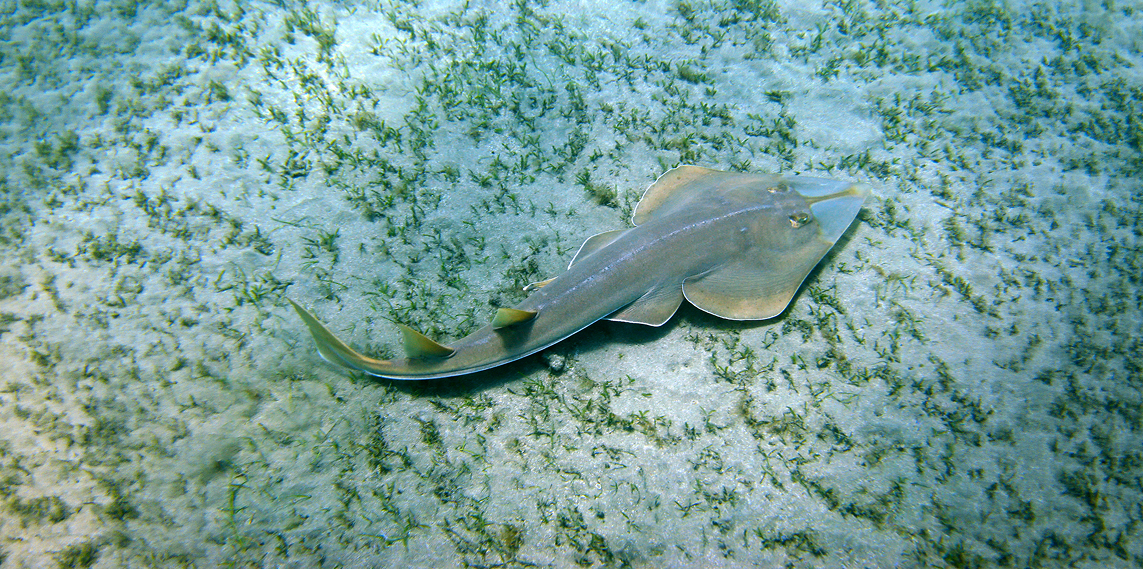
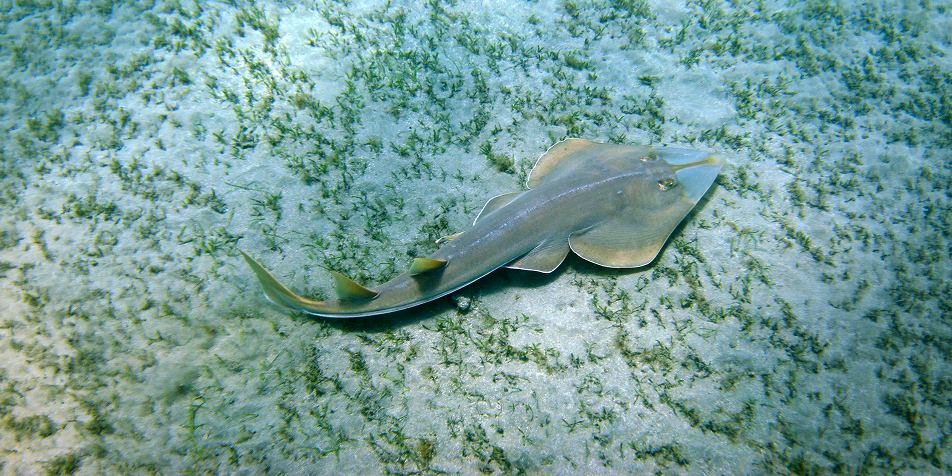
Blackchin guitarfish: camouflaged by the sand
The blackchin guitarfish is one of around 600 species of ray found worldwide. With its very distinctive body shape, it is highly adept at remaining motionless and camouflaged in the sand.
Find out more about this animal, which can also be found in Portuguese waters.
Appearance and behaviour
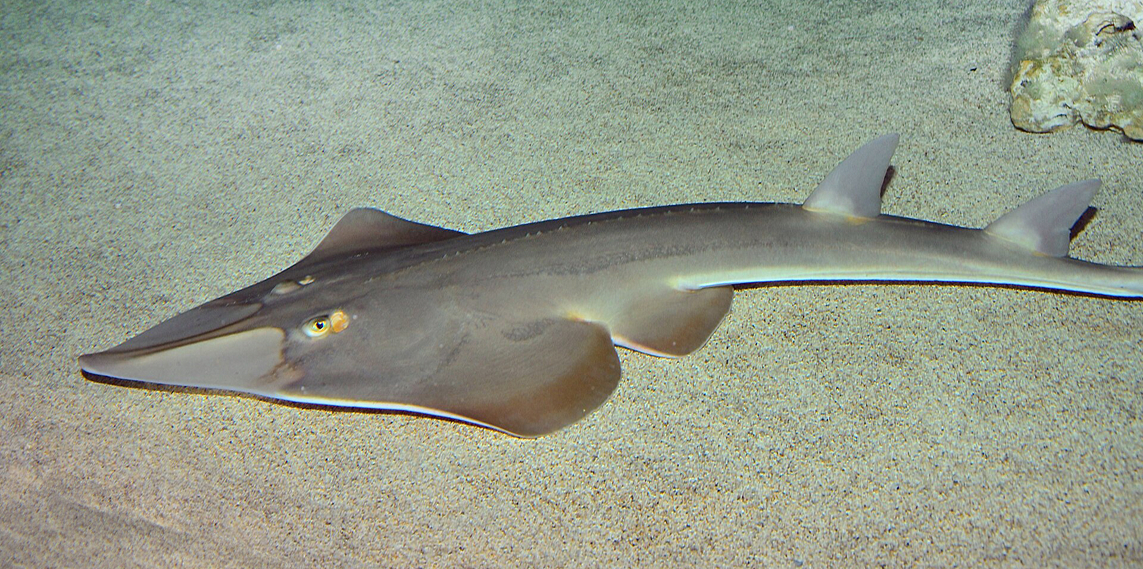
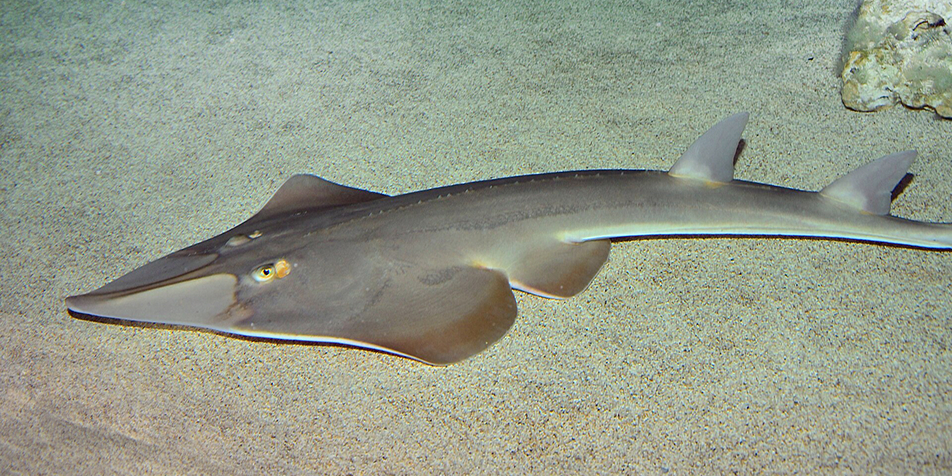
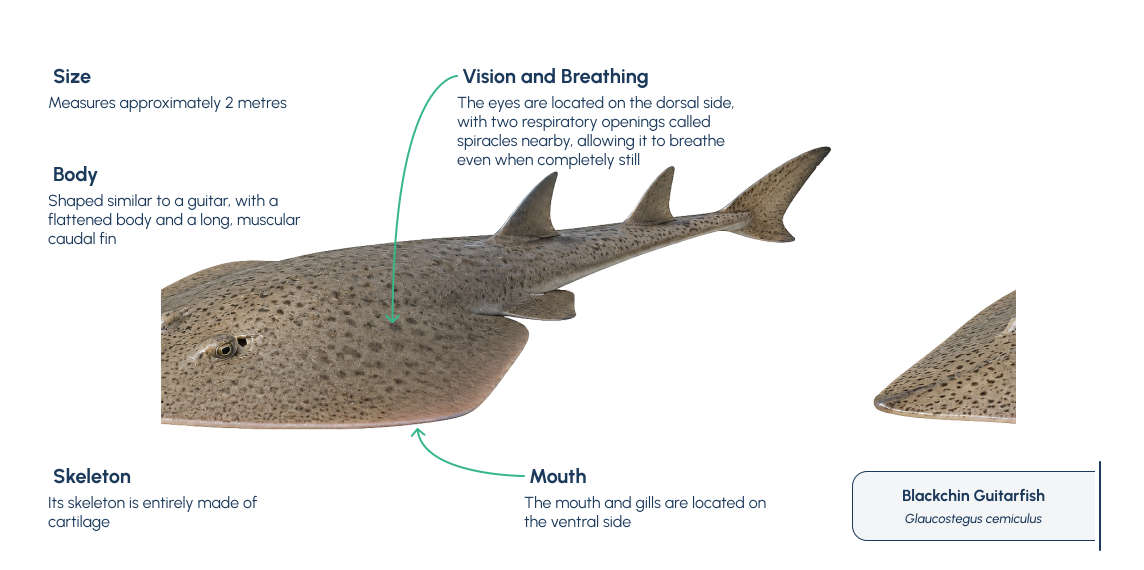
Resembling a guitar (hence its common name), the guitarfish has a flattened body and a long fin, and can grow to around two metres in length. It belongs to the group of cartilaginous fish: fish whose skeleton is made entirely of cartilage.
The guitar fish’s eyes are located on its dorsal side, whilst its mouth and gills are on its ventral side. Next to its eyes, it also has an external respiratory opening (with two holes), known as a spiracle. This structure is essential for the ray to breathe whilst it is motionless, as it ensures a constant flow of water.
The guitar fish’s tail is quite thick and muscular, and is used to aid locomotion. Unlike most other rays, this species’ tail lacks venomous spines.
The shape of this species allows it to be adapted to life on the sandy seabed, where it remains motionless and camouflaged in the sand. To move, it uses an axial undulating motion.
As it lacks a swim bladder (a characteristic it shares with other cartilaginous fish), it relies on a large liver to help control its buoyancy.
Habitat and diet
The guitarfish lives on sandy substrates in the world’s tropical and temperate seas, including Portuguese waters, the west coast of Africa as far as Angola, and the Mediterranean Sea. It can be found at depths of up to 100 metres.
It feeds on small fish, crustaceans, molluscs and other animals it finds on the sandy seabed. Its teeth have evolved into two plates, which are useful for cracking the shells of certain animals.