





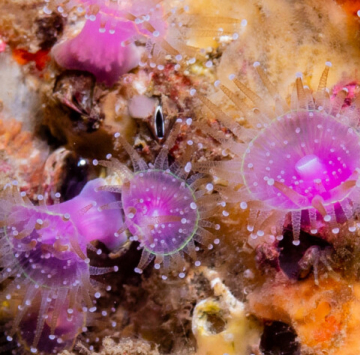
Jewel anemone




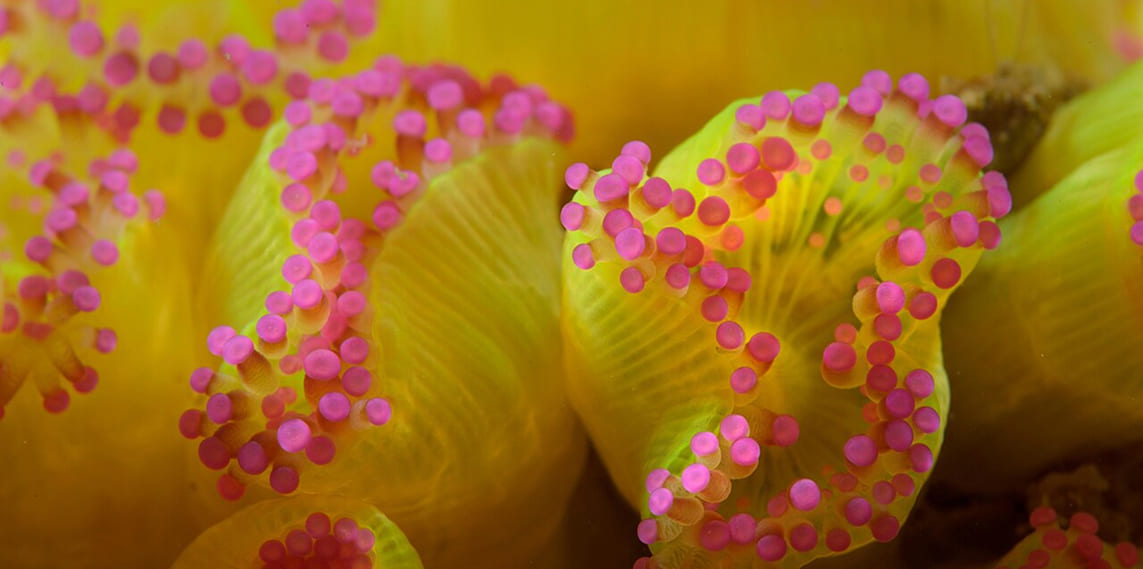
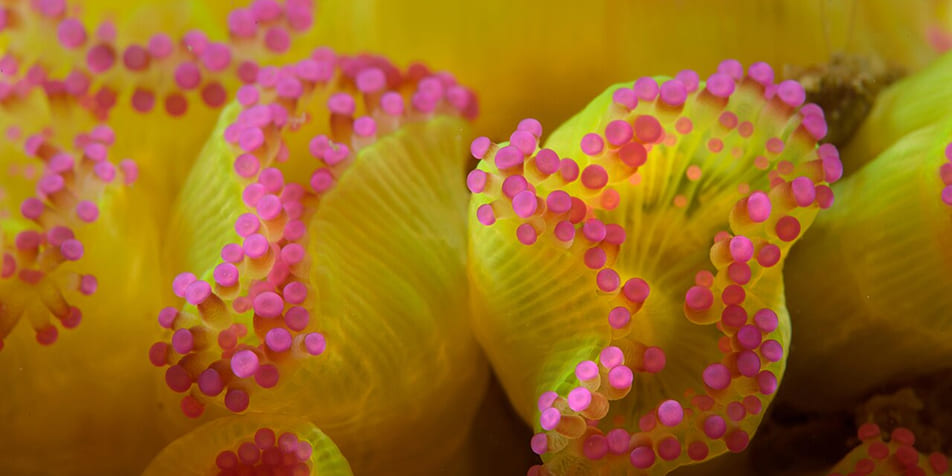
Anemones: the living jewels of the sea
Colourful and dazzling, anemones (class Anthozoa) may look like plants, but they are far from it. These carnivorous marine animals use their mobile tentacles for protection, capturing food and responding to their surroundings.
They belong to the same group as jellyfish and corals, although they remain some of the ocean’s most discreet creatures. Discover these mysterious animals!
Appearance and behaviour
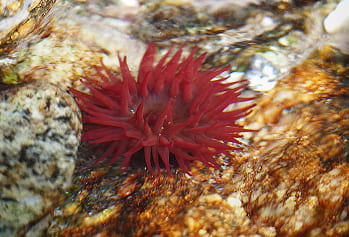
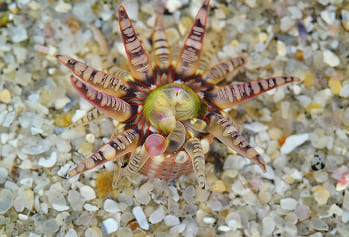
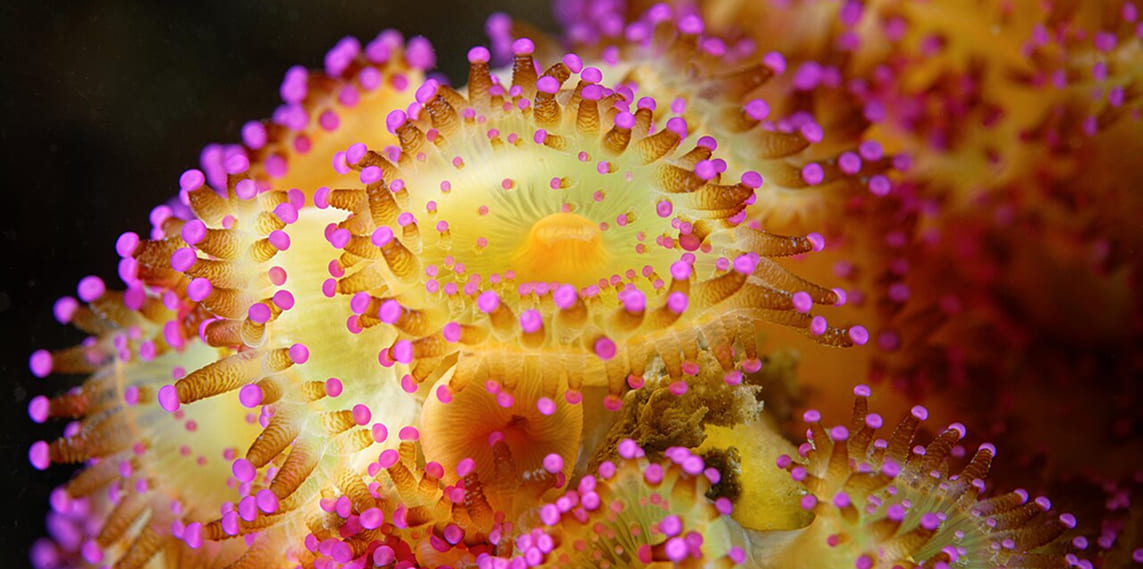
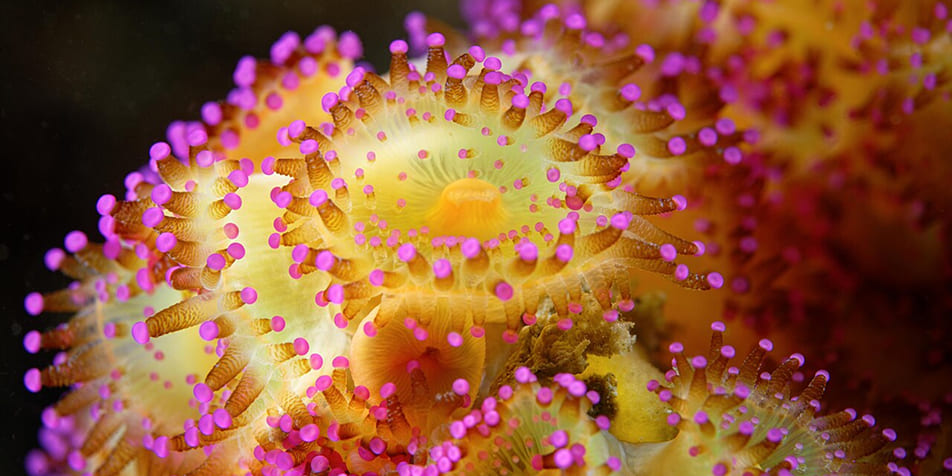
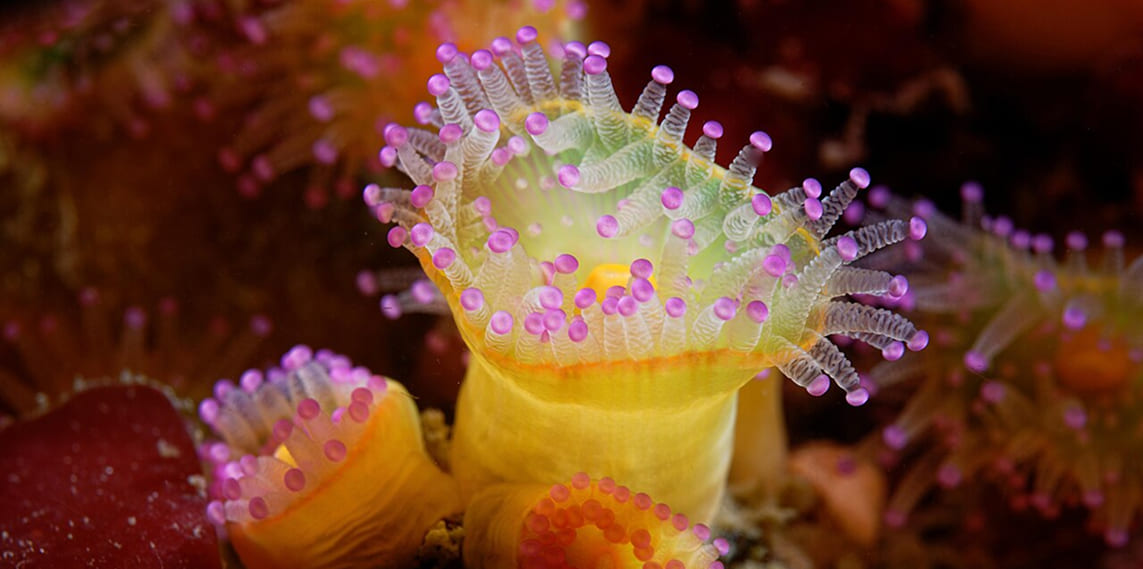
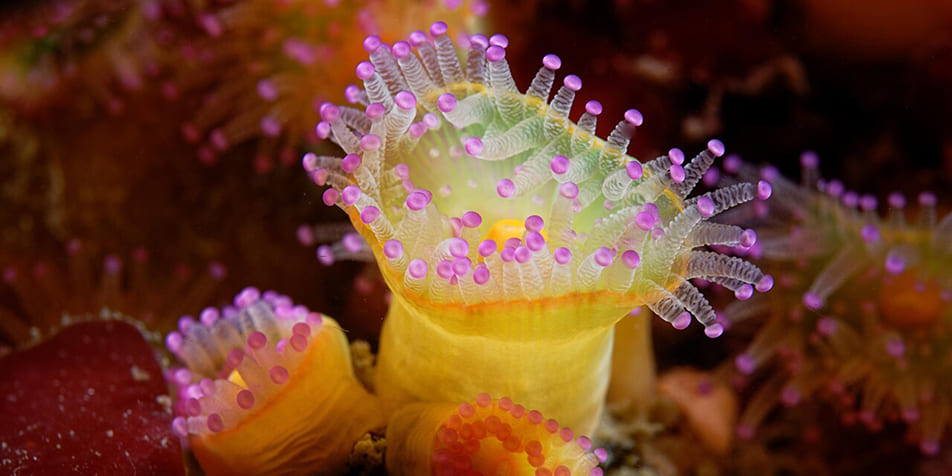
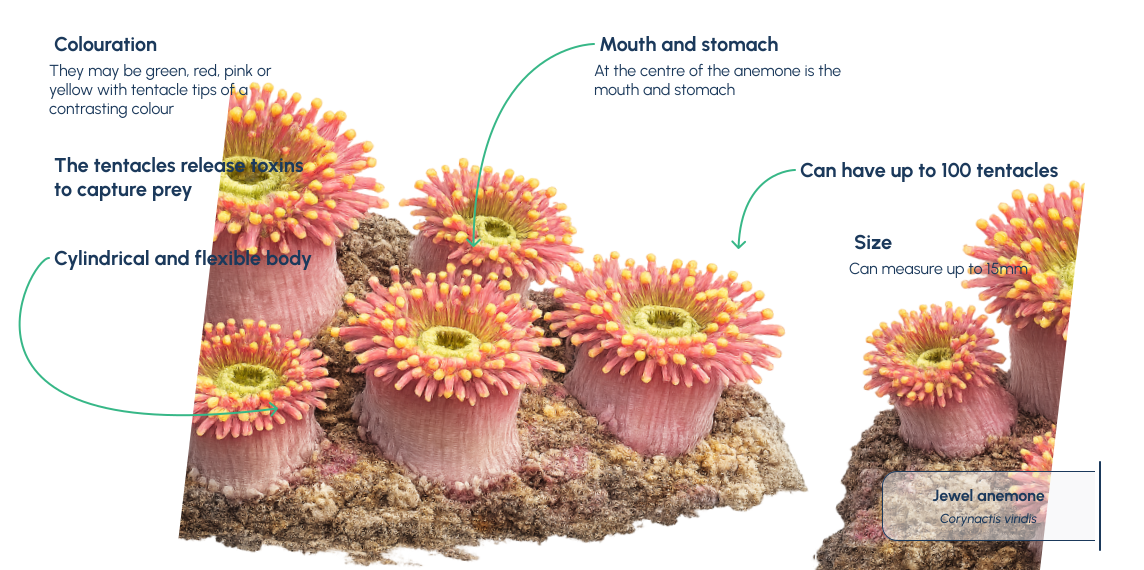
The Latin name “viridis” means “green”, but not all jewel anemones are green. They can also be red, pink or even yellow. The tips of their tentacles contrast with the colour of their body.
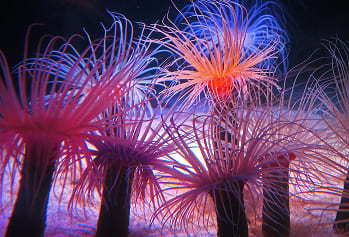
The body of anemones is cylindrical and flexible, with a disc that attaches firmly to a substrate, such as rocks or shells.
The jewel anemone can split itself in two, forming large colonies of anemones of the same colour, which creates colourful “gardens” on the rocks where they live.
Habitat and diet
They live on rocks at depths of up to 80 metres, in areas with little light and strong waves and currents. They can live in large aggregations, forming groups of the same colour.
The hunting process of this species is quite unique: each anemone has around 100 tentacles, which it uses to catch its prey. When prey is captured, the tentacles inject toxins that paralyse it. The prey is then moved towards the centre of the anemone, where the mouth and stomach are located in a single opening.
The jewel anemone is one of the examples of anemones found in the Algarve Reef Marine Natural Park: Pedra do Valado