





Tiger pistol shrimp




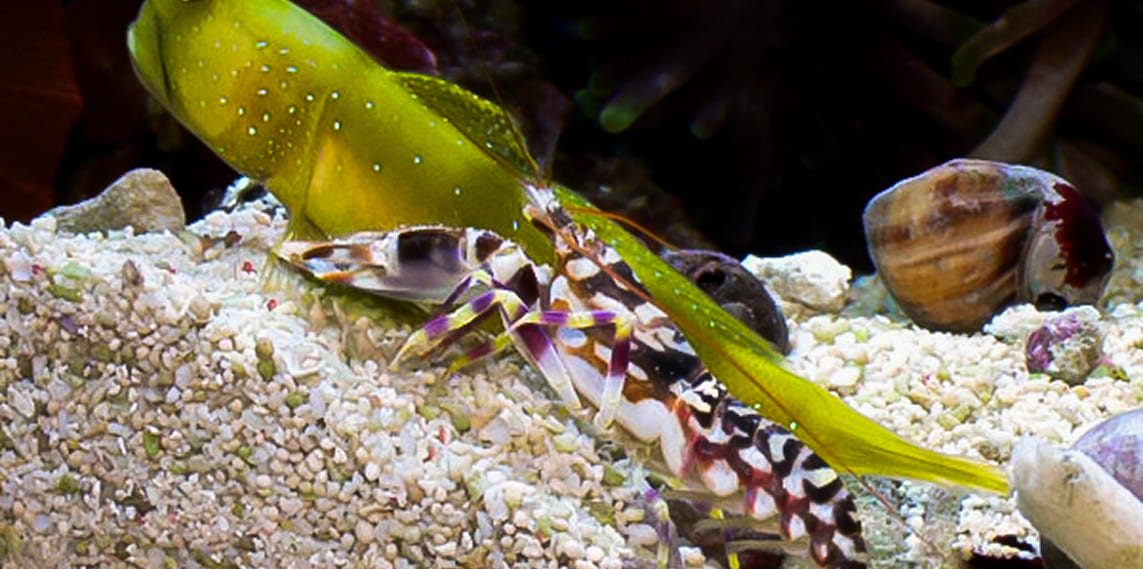
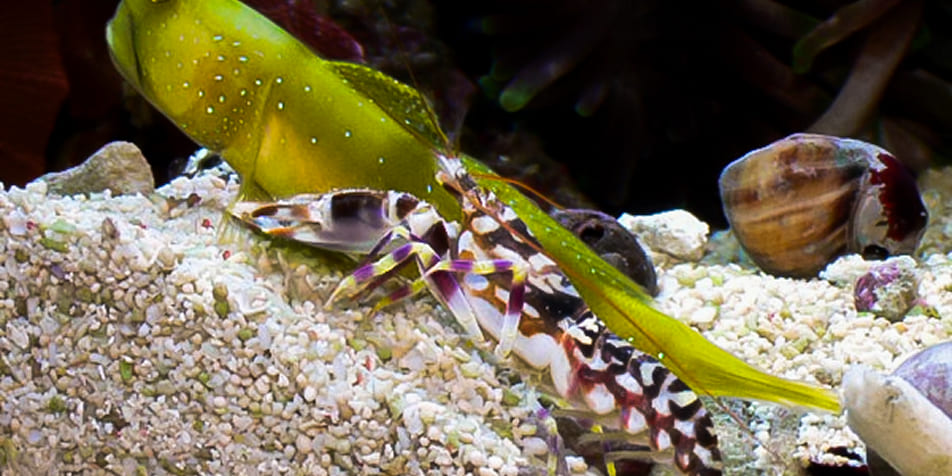
Tiger Pistol Shrimp: the power of a shockwave
Small, with limited vision and accustomed to hiding in small sandy burrows that it builds itself, the Tiger Pistol Shrimp could almost go unnoticed in the ocean. However, its ability to create bubbles that burst with a loud bang makes it a unique, effective and surprisingly noisy predator.
Meet this small crustacean at the Oceanus Aquarium.
Appearance and behaviour
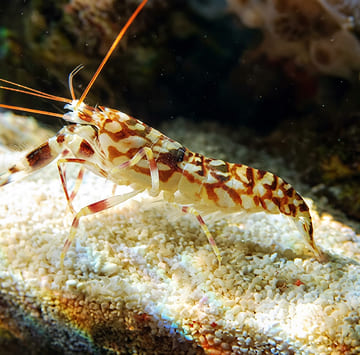
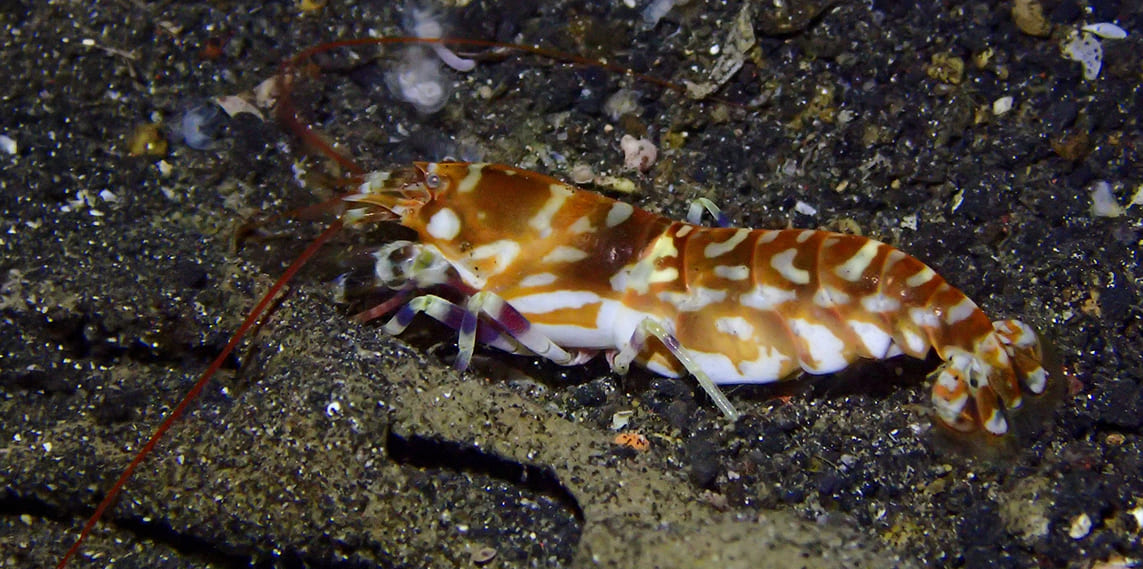
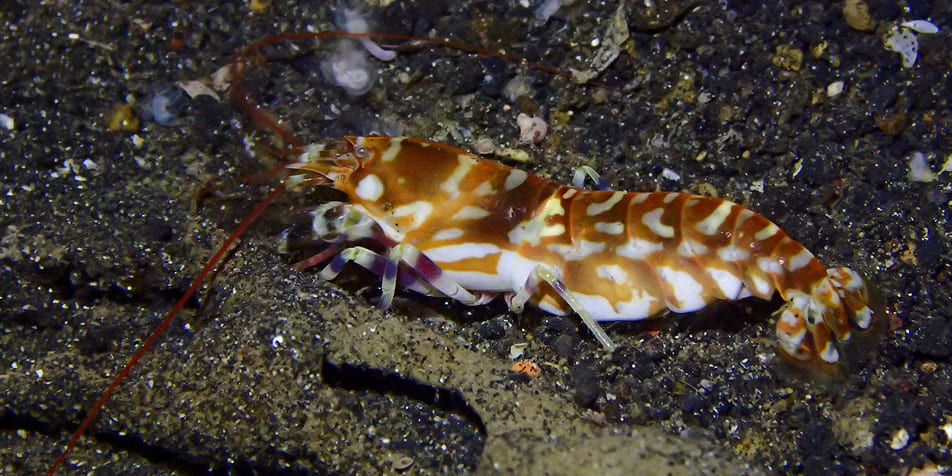
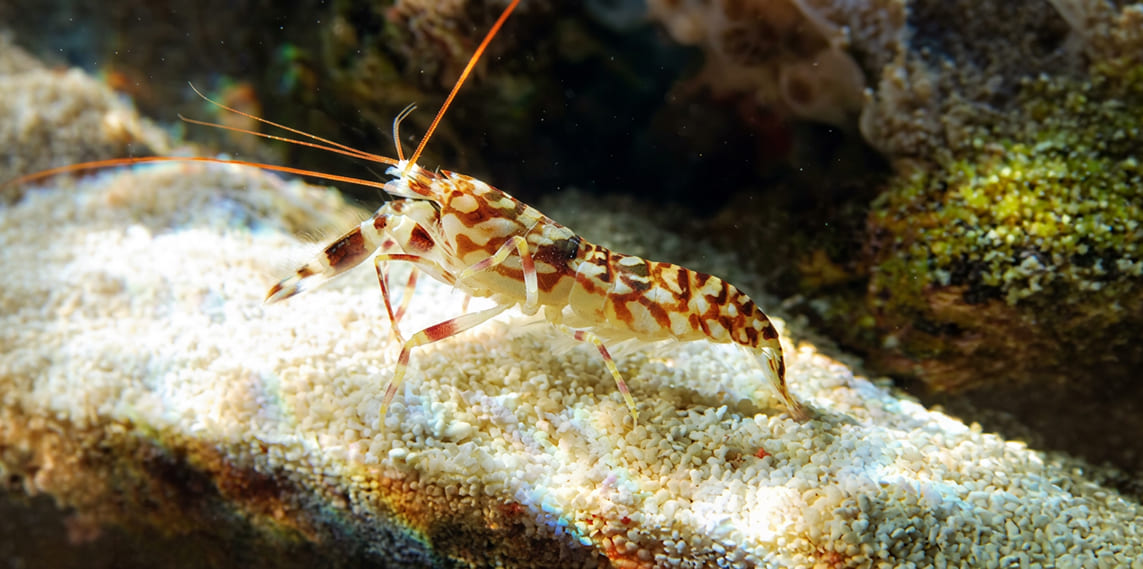
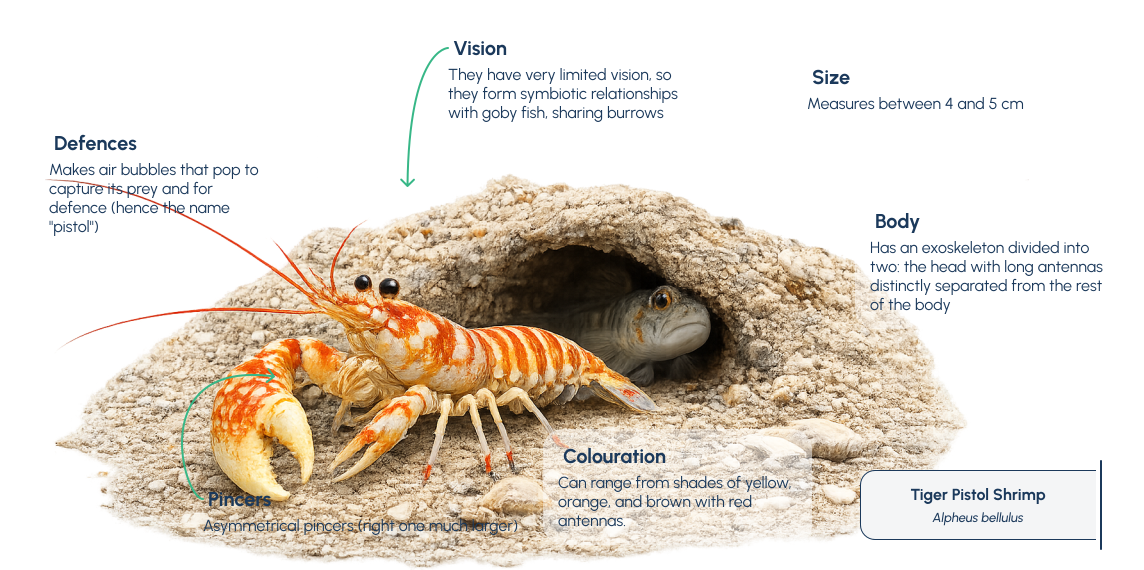
The Tiger Pistol Shrimp has one of its main distinguishing features in its asymmetrical claws. Its right claw, much larger than the left, has cavities that allow it to produce air bubbles.
When they burst, these bubbles produce a loud snap, with a sound similar to a gunshot (hence the reference to “pistol” in the species’ common name), as well as a shockwave directed at more than 100 kilometres per hour. This ability allows the Tiger Pistol Shrimp to hunt prey and protect itself from predators by stunning them and propelling them away.
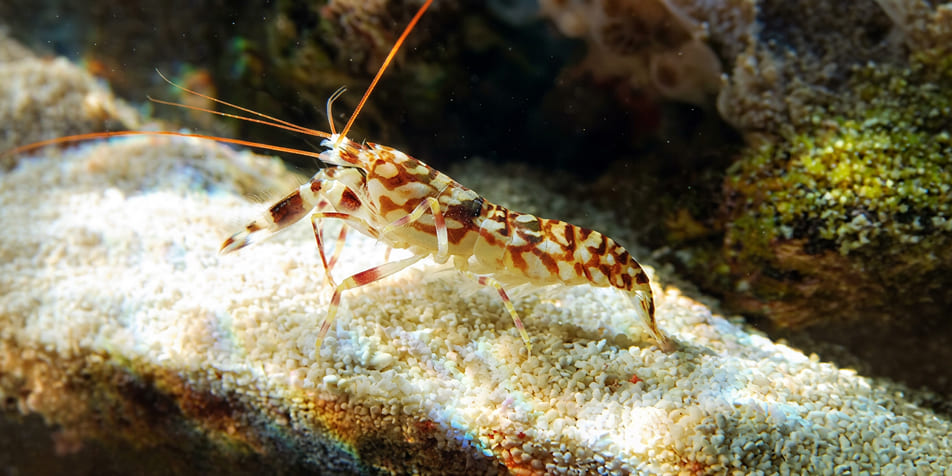
The Tiger Pistol Shrimp belongs to the crustacean group and, like other crustaceans, has an exoskeleton that covers and protects its body. Its body is divided into a cephalic region (head), with antennae as appendages, and a trunk. Excluding the antennae, the species has an average length of around 4–5 centimetres. Its colouring can vary between shades of orange, yellow and brown, with red antennae.
It has very limited vision and therefore benefits greatly from symbiotic (mutualistic) relationships with goby fish species. The Tiger Pistol Shrimp builds burrows for shelter and protection and keeps them clean, while the fish also shares the burrow and acts as a lookout for potential dangers.
Habitat and diet
It lives in reefs and seagrass meadows in temperate and tropical regions of the Indo-Pacific, where it builds its burrow in sandy, muddy areas with organic debris in shallow waters. The small burrows are then reinforced with pieces of shells and coral to strengthen the structure.
An omnivore, the Tiger Pistol Shrimp mainly feeds on small invertebrates, although it may also consume algae, microalgae, plankton and organic matter.