




The fisherman, the turtle, and the satellite that unites them
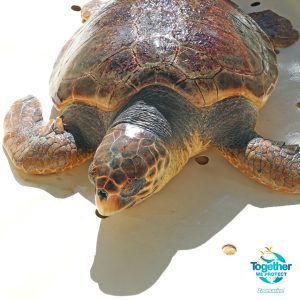
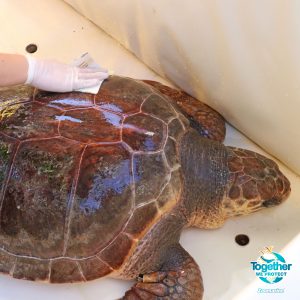
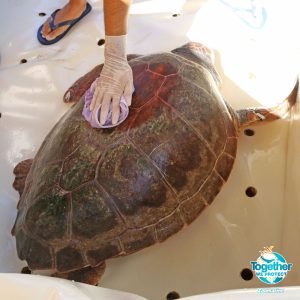
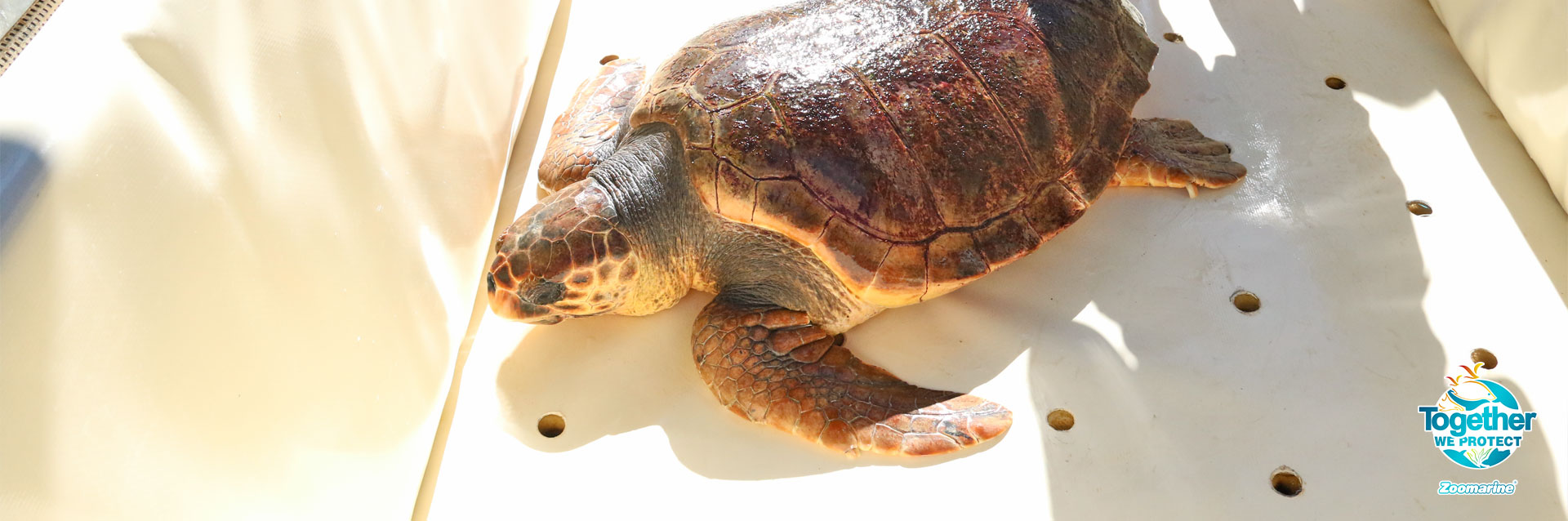
In June 2021, near the banks of the Guadiana River in Azinhal, a fisherman saved a turtle from drowning. And because there was a risk of it developing aspiration pneumonia (from being caught in the nets and inadvertently inhaling water), that fisherman, Ricardo Gonçalves, asked the team of specialists at Zoomarine’s Porto d’Abrigo to collect it for observation, treatment and subsequent return to the wild. Thirteen months later, the loggerhead turtle returns to the sea, in a renewed cooperation between Zoomarine and the Portuguese Navy, honouring the noble effort of a fisherman who showed agility, vision, courage and empathy.
The sea turtle, meanwhile named Salina, is a specimen of the Caretta caretta species, the most common in Portuguese waters – it is a protected species that urgently needs to be defended from possible extinction. It arrived at Porto d’Abrigo measuring 63 cm and weighing 38.7 kg, and will return larger (67 cm) and much heavier (51.8 kg).
Not so unusual was the fish hook that an X-ray detected stuck almost at the entrance to this turtle’s stomach. Several attempts by Dr. José Sampayo, an international specialist in zoological endoscopy, proved unsuccessful in safely removing it; however, as the event is now old and the hook is completely surrounded by tissue, it was assumed that it no longer poses a danger and will disintegrate over time.
Meanwhile, the time has come for Salina to return to the sea. The return will take place on board the NRP Cassiopeia, which will depart at 8:30 a.m. from the Commercial Quay in Faro, bound for 12 nautical miles (22 kilometres) to the south.
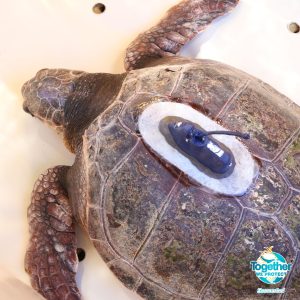
And as Salina’s story is anything but ordinary, her return will also be somewhat unconventional – because attached to her shell will be a device (KiwiSat Argos) which, if all goes as planned, will allow us to track her progress across the seas of this planet for approximately the next 425 days. This will certainly be the best way for her saviour, Ricardo Gonçalves, to follow the turtle he helped save and who will always be special to him.
However, no matter how closely she continues to be monitored, the hope is that Salina will never again encounter humans. Unfortunately, the risks to her survival, even far from our species, will be immense – and many of them will continue to be associated with our activities, negligence, greed or simple irresponsibility…
However, thanks to the generosity and sensitivity of a fisherman from Azinhal, and the multidisciplinary team at her zookeepers, Salina can now try to fulfil her destiny once again – for the good of her species and our planet… Farewell, Salina!