






Falanges Project - Repopulation of Escalo-do-Arade fish in the Odelouca river
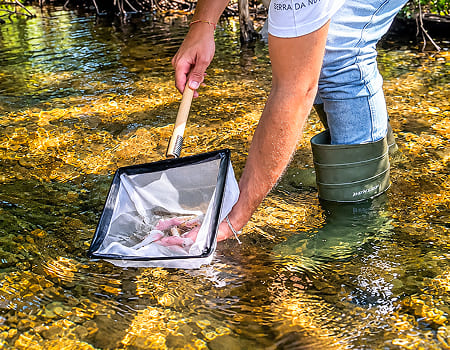
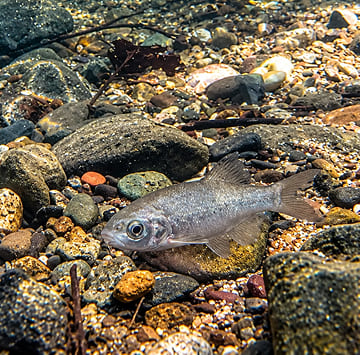
Zoomarine announces that a restocking operation has been carried out in the Odelouca River in the Algarve, with twenty specimens of Escalo-do-Arade (Squalius aradensis), a species of freshwater fish currently classified as critically endangered. This operation took place as part of the Falanges Project, an initiative promoted by Águas do Algarve, in partnership with Zoomarine and Quercus, whose mission is to strengthen the populations of native fish species in the rivers of the Algarve that are in danger of extinction.
Since its creation, the Falanges Project has been responsible for reproduction efforts in a controlled environment, with the aim of creating safe populations that can subsequently reinforce these species in their natural habitats. These populations will help to repopulate the rivers once they have been rehabilitated and sustainable conditions have been guaranteed. In this context, the Falanges partnership has implemented breeding programmes for three species from the rivers of the Algarve: the Escalo-do-Arade (Squalius aradensis), the Boga-do-Sudoeste (Iberochondrostoma almacai), and the Barbo-do-Sul (Luciobarbus sclateri).
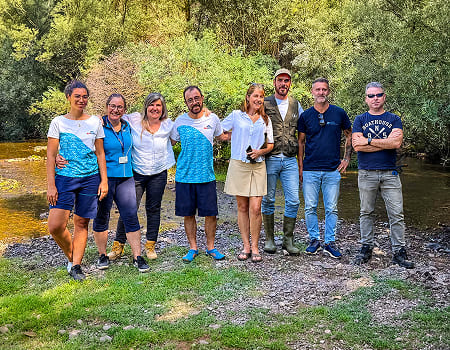
In 2025, around three dozen Escalo-do-Arade fish were born at Zoomarine, twenty of which have now been released to reinforce the populations of this species in the Odelouca river, their natural habitat, through an initiative carried out by professionals from Zoomarine’s Science and Conservation team and teams from Águas do Algarve and QUERCUS.
“Although our perception of drought is conditioned by the welcome rain in May, periods of water scarcity in the Algarve are becoming increasingly frequent and are putting the future existence of this species, which only exists in this region, at risk, making projects such as Falanges so essential,” says João Neves, Director of Science and Conservation at Zoomarine. He adds: “Witnessing the presence of these two dozen scalers reinforcing the population of these streams gives us all a sense of accomplishment. We know that the road ahead will be challenging, but we are determined to continue our conservation efforts, working closely with Águas do Algarve and Quercus to protect these valuable natural resources.”
“We are very happy with the completion of this restocking action and with the excellent coordination between the partners. Falanges is promoted by Águas do Algarve, but is the result of a cooperative effort between three entities, each with a different nature but with the same focus: to implement a conservation project in the Algarve for the preservation of these three species of fish endemic to south-western Portugal, two of which are classified as “critically endangered”. Through this partnership, we want to contribute to the enhancement and preservation of riverine ecosystems in the Algarve region. In this first phase, our priority area of intervention is the Site of Community Importance “Arade-Odelouca”. In addition to the programme to strengthen these populations, we are strongly committed to a range of other activities, such as monitoring the water quality of the river; ecological and ichthyofauna monitoring; and an environmental awareness programme focused on the importance of the services provided by river ecosystems, their role in the urban water cycle, and the need to preserve the biological diversity of the Algarve region,” says Marisa Viriato, Coordinator of the Water Sources Department at Águas do Algarve.
According to Carlos Silva, coordinator of River Ecosystem Conservation Projects at Quercus, “national watercourses are under severe pressure. The combined effects of human activity and climate change, such as increasingly prolonged periods of drought, are devastating for the species that inhabit our rivers, and the Escalo-do-Arade is one of them. The FALANGES project is of crucial importance for the Algarve and for the country. It is an example of how collaboration between three entities towards a common goal can contribute decisively to improving knowledge and the conservation status of our natural heritage and biodiversity. The repopulation carried out on the Odelouca river with a further twenty specimens of this species, which is unique to our country, fills us with satisfaction and hope, as the operation now carried out will contribute to the survival of this species in its natural habitat.”
The Escalo-do-Arade is a species found in the Arade river basin, where the largest population remains, and can also be found in the Alvor, Aljezur, Quarteira and Seixe rivers. According to the Red Book of Vertebrates of Portugal, a reference work for the classification of vertebrate species in the country, factors such as changes in the natural hydrological regime, the proliferation of non-indigenous species and the degradation of water quality are responsible for a significant reduction in the number of mature individuals of the species.
It is in this context that Zoomarine has been investing increasingly in the protection and conservation of species and habitats, collaborating on various projects and with various entities to rescue, rehabilitate and return marine and aquatic animals to their natural environment. The Falanges Project is an example of this effort. Since the arrival of the first specimens at Zoomarine two years ago, around 30 individuals have been born.
Those interested can visit Zoomarine’s Oceanus aquarium to see the Escalo-do-Arade and learn more about this urgent conservation project, focused on protecting these species that are native and exclusive to the Algarve region.
Together, We Protect!