






Zoomarine takes part in international study tracking sea turtles during one of the most mysterious stages of their lives
Zoomarine Algarve participated in an international scientific study that reveals new data on the diving behaviour of juvenile sea turtles during one of the least understood phases of their life cycle: the first years spent in the open ocean.
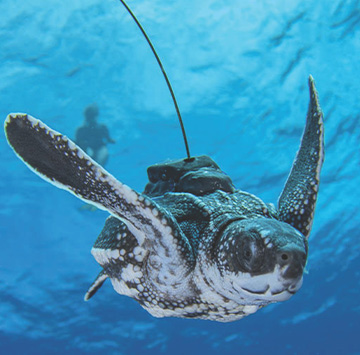
Integrated into the Lost Years Initiative, promoted by Upwell, the study “Pioneering insights into the diving behaviour of early-stage sea turtles revealed by novel marine miniaturised satellite tags” used miniaturised satellite transmitters to track sea turtles during a phase that, for decades, has remained virtually invisible to science.
The research analysed more than 2,400 daily records collected from 71 juvenile turtles fitted with this technology in different ocean regions. The data enabled the identification of previously unknown patterns of underwater behaviour, revealing that as turtles grow, they tend to dive progressively deeper, for longer periods, and in a more structured way.
These findings help researchers better understand how these species move, adapt and survive in the wild during a particularly sensitive stage of their development.
“Projects like this demonstrate that marine conservation increasingly depends on collaboration between institutions, science and technology. By better understanding what happens in the early years of sea turtles’ lives, we can anticipate risks, support more informed decision-making and contribute to more effective protection strategies. For Zoomarine, participating in this study is also a natural extension of the work we have been carrying out for more than two decades at our Porto d’Abrigo,” says João Neves, Conservation Director at Zoomarine Algarve.
George Shillinger, Executive Director of Upwell, adds that “it is with great enthusiasm that we see this unique global scientific collaboration generating results that help shed light on an enigmatic and vulnerable phase of the sea turtle life cycle. Our goal is for these discoveries to be applied in management and conservation measures that contribute to protecting sea turtles throughout their entire life cycle.”
According to the researchers, the knowledge now obtained may help predict the movements of juvenile turtles in the open ocean and identify potential risk areas associated with human activity, such as intensive fishing zones. Understanding dive depth and duration may also support the design of more appropriate conservation measures, including the adaptation of certain fishing gear or the design of marine protected areas that take into account the actual use of habitat by these species.
The study results from an international scientific collaboration between 17 institutions across seven countries, including Upwell, Mercator Ocean International, Aquarium La Rochelle, the Centre d’Études et de Soins pour les Tortues Marines, Blue Wave Consulting LLC, FAU Marine Science Laboratory, the Department of Biological Sciences and the Charles E. Schmidt College of Science at Florida Atlantic University, Two Oceans Aquarium Foundation, Nelson Mandela University, the Department of Marine and Coastal Resources, Phuket Marine Biological Center, Marine and Coastal Resources Research Center — Upper Andaman Sea, Sea Turtle Ecology Lab, Okinawa Churashima Foundation, Okinawa Churaumi Aquarium, the Institute of Marine Sciences, IICM Okeanos, the University of the Azores, the Institute of Marine Research, IMAR, Rotterdam Zoo and Zoomarine Algarve.
Participation in this study highlights Zoomarine Algarve’s role in international marine research and conservation networks, reinforcing the importance of cooperation between scientific entities, research centres, zoological institutions and organisations dedicated to ocean protection. This international collaboration continues the work developed by Zoomarine since 2002 through Porto d’Abrigo – Rehabilitation Center for Marine Species – in the areas of marine wildlife rehabilitation, research, environmental awareness and conservation of threatened species.